Bakuchiol vs Retinol for Skin After 40: The Honest Comparison
Bakuchiol is sold as 'natural retinol' — gentler, plant-based, no irritation. The reality is more nuanced. What each actually does on adult skin.
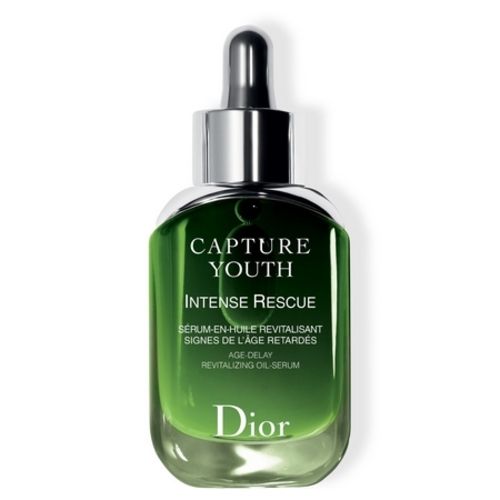
Walk into any skincare aisle and you'll find bakuchiol marketed as the gentle, plant-based, natural alternative to retinol — same anti-aging benefits, none of the irritation. For adults over 40 who have either struggled with retinol's redness and peeling or who avoid retinol because of skin sensitivity, this sounds ideal. The honest reality is more nuanced. Bakuchiol does share some mechanisms with retinol and produces measurable anti-aging effects in clinical studies. It's also genuinely gentler on sensitive skin. But it isn't a 1:1 replacement, and the marketing claims around it often overstate its potency. This guide compares what each ingredient actually does at the cellular level, who benefits most from which, when to combine them, and how to decide what belongs in your routine after 40. The goal isn't to declare a winner — both have legitimate roles in an adult skincare cabinet — but to give you the honest information you need to choose without falling for either the "natural is better" or the "retinol is the only thing that works" oversimplification.
The quick answer
If you can tolerate it, retinol (or prescription tretinoin) produces stronger, faster, more dramatic results than bakuchiol — and is supported by decades of clinical evidence. If retinol irritates your skin, or you're pregnant/breastfeeding, or you want to start with something gentler, bakuchiol is a legitimate alternative with real (if more modest) anti-aging effects.
The two can be combined: bakuchiol in the morning, retinol at night. This pairing is increasingly common in adult routines and is generally well tolerated. For the broader retinol introduction, see retinol for beginners after 40.
What retinol actually does
Retinol is a vitamin A derivative. On skin, it converts to retinoic acid — the active form — and binds to retinoic acid receptors in skin cells. This produces a cascade of effects:
- Increases cell turnover (new skin cells replace old ones faster)
- Stimulates collagen production
- Reduces fine lines and crow's feet
- Fades hyperpigmentation
- Unclogs pores (helpful for adult acne)
- Improves skin texture and tone
Conversion potency varies by form:
| Form | Strength | Notes |
|---|---|---|
| Retinyl palmitate | Weakest | Multiple conversions needed; minimal effect |
| Retinol | Standard OTC | Two conversions to retinoic acid |
| Retinaldehyde | Stronger | One conversion |
| Tretinoin (retinoic acid) | Prescription | No conversion — direct activity |
Strength comes at a cost: irritation, redness, peeling, photosensitivity, and a "retinization" period of 4-8 weeks where skin looks worse before it looks better.
What bakuchiol actually does
Bakuchiol is a compound derived from the Psoralea corylifolia plant (Babchi). It's not chemically related to retinol — it's a meroterpenoid, structurally different — but it activates some of the same retinoid receptor pathways indirectly. Studies show it:
- Stimulates collagen production
- Reduces fine lines and wrinkles
- Improves skin elasticity
- Fades hyperpigmentation (more modestly than retinol)
- Has antioxidant properties
The key 2018 double-blind study in the British Journal of Dermatology compared 0.5% bakuchiol twice daily to 0.5% retinol once daily over 12 weeks. Both produced similar improvements in wrinkles and hyperpigmentation. Bakuchiol caused significantly less stinging and scaling.
Important caveats:
- The bakuchiol concentration was high (0.5%) — many marketed products use 0.1-0.3%
- Twice-daily bakuchiol vs once-daily retinol is the typical clinical comparison
- Most marketing claims extrapolate from this single study
The honest comparison
| Factor | Retinol | Bakuchiol |
|---|---|---|
| Mechanism | Direct retinoid receptor activation | Indirect retinoid pathway activation |
| Evidence base | Decades of studies | Limited (mostly post-2018) |
| Speed of visible results | 8-12 weeks | 12-16 weeks |
| Strength | Stronger | Milder |
| Irritation risk | High initially | Low |
| Sun sensitivity | Yes (use at night, daily SPF) | Minimal |
| Pregnancy-safe | No | Yes (generally considered safe) |
| Cost | $$-$$$$ | $$-$$$ |
| Best for | Visible wrinkles, hyperpigmentation, texture | Sensitive skin, retinol-intolerant, gradual approach |
For understanding why ingredient lists matter and how to evaluate concentrations, see how to read skincare ingredient lists after 40.
Who should choose retinol
Retinol (or prescription tretinoin) is the better choice when:
- You have visible photoaging — wrinkles, sun spots, rough texture
- You've tolerated retinoids before
- Your skin is normal-to-oily
- You want the strongest evidence-backed anti-aging ingredient
- You're willing to commit to the retinization period
- You'll use daily sunscreen (non-negotiable with retinol)
Start low (0.25%), use 2-3 nights per week, build to nightly over 6-8 weeks. The introduction-to-skincare strategy applies here. See how to introduce a new product to your skincare routine for layering guidance.
Who should choose bakuchiol
Bakuchiol is the better starting point when:
- Your skin is sensitive or rosacea-prone (see rosacea after 40 — why adult faces flush)
- You've tried retinol and couldn't tolerate the irritation
- You're pregnant, breastfeeding, or planning pregnancy
- You want to use an anti-aging active in the morning without sun sensitivity concerns
- You're in your 30s and want gradual, gentle anti-aging — see anti-aging skincare in your 30s
- You're starting from scratch and want to build tolerance slowly
Who should use both
Many adults benefit from combining them — bakuchiol in the morning, retinol at night. This delivers retinoid-pathway activation twice daily without the sun sensitivity issue, and lets sensitive skin types extend retinol benefits while reducing irritation.
The combination protocol:
- Morning: cleanse → bakuchiol serum → moisturizer → sunscreen
- Night: cleanse → retinol → moisturizer
Start with retinol 2-3 nights per week. Use bakuchiol daily in the morning from week one. Build retinol frequency over 6-8 weeks.
This pairing assumes the rest of your routine is solid. The morning/night structure is covered in detail in morning vs night skincare routine after 40.
Common mistakes
Switching to bakuchiol because retinol "didn't work" after two weeks. Retinol takes 8-12 weeks to show visible results. Two weeks is the retinization period — the phase that looks worse before better. Quitting then misses the actual benefit.
Using both at the same time, in the same step. They can be in the same routine (different times of day) but combining them in a single application is unnecessary and increases irritation potential.
Assuming "natural" means safer or gentler. Bakuchiol is gentler than retinol, but plant-derived doesn't automatically mean better. The compound's mechanisms still matter. Some plant compounds are harsh; bakuchiol just happens to be mild.
Buying low-concentration bakuchiol expecting clinical-study results. The 2018 study used 0.5%. Many marketed products use 0.1% — which may not deliver meaningful effects. Read the percentage on the label.
Skipping sunscreen because you're using bakuchiol. Bakuchiol doesn't cause sun sensitivity, but UV damage is the #1 driver of visible aging regardless of which actives you use. See sunscreen after 40 — the non-negotiable.
Combining bakuchiol or retinol with strong acids on the same night. Both retinol and bakuchiol pair poorly with concentrated AHA/BHA exfoliants on the same evening. Alternate nights. See salicylic vs glycolic vs lactic acid after 40.
What concentrations to look for
Retinol:
- Beginner: 0.25% (e.g., The Ordinary, Olay)
- Standard: 0.5% (most drugstore and mid-tier brands)
- Advanced: 1.0% (after 6+ months of tolerance building)
- Prescription tretinoin: 0.025%, 0.05%, 0.1% (different strength scale — see a dermatologist)
Bakuchiol:
- Effective range: 0.5% to 1.0%
- Below 0.3%: probably not enough to match clinical-study results
- Most reliable brands: Indeed Labs, Inkey List, Herbivore, Ole Henriksen, Beauty Pie
When evaluating either, look at where the active appears in the ingredient list. A label that lists retinol or bakuchiol after a long list of fillers likely contains a token amount.
Setting realistic expectations
For both ingredients, the first visible improvements appear at 8-12 weeks. The dramatic visible changes — wrinkle softening, sun-spot fading, texture refinement — come at 4-6 months of consistent use. This is consistent across retinoid pathway activators.
What neither does:
- Erase deep wrinkles
- Fill volume loss
- Lift sagging skin
- Replace what professional procedures do (see cosmetic procedures after 40 — what's worth it)
What both do reliably:
- Improve skin texture
- Reduce fine lines (especially crow's feet)
- Fade post-inflammatory pigmentation
- Increase overall radiance
The reasonable expectation: gradual, consistent improvement in skin quality. Not transformation. For deeper context on what skincare can and cannot achieve, see skincare mistakes that age you faster.
FAQ
Is bakuchiol really as effective as retinol? For wrinkles and pigmentation at the same concentration, the single direct-comparison study found similar results over 12 weeks. But the bakuchiol group used it twice daily versus the retinol group once daily. In real-world use with retinol used at typical strength (0.5%-1.0%) consistently, retinol generally produces stronger results.
Can I use bakuchiol every day from the start? Yes. Bakuchiol doesn't cause the retinization period that retinol does. Most people tolerate daily use from day one with no issues.
Will bakuchiol make my skin purge like retinol does? Rarely. The increased cell turnover that causes retinol purging is much less pronounced with bakuchiol. Some adults experience mild congestion in the first 2-3 weeks, but it's uncommon.
Is bakuchiol safe during pregnancy? Most dermatologists consider it safe — there's no evidence of harm and it's not a vitamin A derivative. But because bakuchiol research is newer, some practitioners still recommend caution. Discuss with your OB before adding any active.
Can I use bakuchiol around my eyes? Yes. It's gentler than retinol and most adults tolerate it on eyelids and under-eye skin. Retinol can be used in the eye area too, but at lower frequency and with extra moisturizer.
Does bakuchiol expire faster than retinol? Both ingredients oxidize. Bakuchiol is somewhat more stable. Both should be stored away from sunlight and used within 6-12 months of opening.
Will I see results faster with prescription tretinoin? Yes. Tretinoin is the direct active form — no conversion needed. Visible results typically appear at 6-8 weeks with proper use. The trade-off is more irritation during introduction.
Can I use bakuchiol with vitamin C? Yes. They pair well in a morning routine: vitamin C first, then bakuchiol, then moisturizer, then sunscreen. See vitamin C serum for skin over 40.
Is the marketing around "natural retinol" honest? Mostly no. Bakuchiol activates some retinoid pathways indirectly, but it's not a natural form of retinol — they're chemically unrelated. The phrase oversimplifies the science.
What if I have rosacea? Start with bakuchiol. Retinol commonly triggers flushing in rosacea-prone skin. Bakuchiol is well tolerated by most rosacea patients. Pair with calming ingredients like niacinamide — see niacinamide for skin over 40.
Can men use bakuchiol the same way? Yes. The skincare science applies regardless of gender. For specifics, see skincare for men after 40 — what's different.
Related guides
For the broader retinol introduction, see retinol for beginners after 40. For how to fit either ingredient into a daily routine, morning vs night skincare routine after 40 and how to layer skincare products after 40. For evaluating product labels honestly, how to read skincare ingredient lists after 40.

How to Prepare Your Skin Before Summer: The Adult Pre-Sun Protocol After 40
Adults who treat summer skin protection as a day-of project lose ground every year. The honest pre-summer protocol that pays back for months of consistent outdoor exposure.
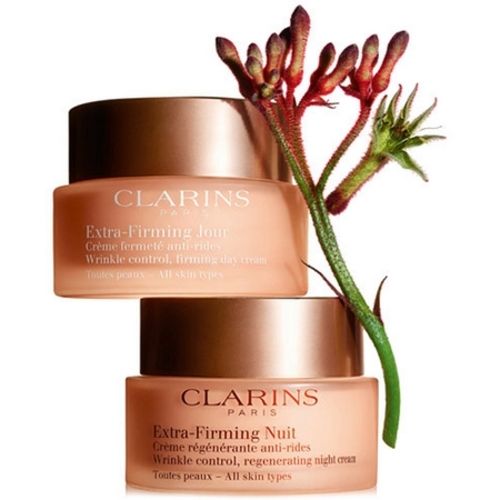
Clarins Extra-Firming: The Honest Adult Take on Firming Anti-Aging Cream
Clarins Extra-Firming has been the reference firming cream for adults over 35 for two decades. The honest assessment of what it does, what it doesn't, and where it fits in an adult routine.

Ferulic Acid for Adult Skin Over 40: The Underrated Antioxidant
Ferulic acid is the antioxidant that stabilizes vitamin C, extends UV protection, and gets ignored in mainstream skincare. The honest adult guide.