Retinol for Beginners After 40: A Practical Guide
Start slowly. Three nights a week. Pea-sized amount. Six months minimum to see results. The actual protocol for adding the most-evidence-backed anti-aging ingredient to your routine.
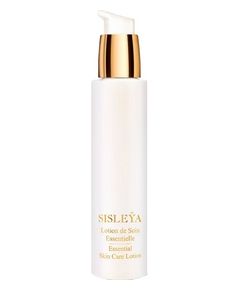
Retinoids are the single most-evidence-backed topical anti-aging ingredient. They genuinely reduce fine lines, improve skin texture, fade pigmentation, and accelerate cell turnover. They're also the ingredient most people start wrong, ruin their skin barrier with, and quit within six weeks — which is exactly when the side effects subside and the benefits start.
This is the practical protocol: the actual differences between retinol, retinaldehyde, adapalene, and tretinoin (most marketing blurs these); the slow-ramp method that prevents irritation; what to do when your skin starts purging; how it pairs with the rest of your routine; and the small set of mistakes that cause people to give up on what could be the single best thing they ever did for their skin. Pair this with Simple Skincare Routine After 40, Anti-Aging Skincare in Your 30s, and The Adult Grooming Checklist for the surrounding system.
What "retinoid" actually means
"Retinoid" is the family. All retinoids are forms of vitamin A. They convert (or skip conversion) into retinoic acid, which is the active form that affects skin cells. The conversion chain matters:
Retinyl palmitate / retinyl acetate → Retinol → Retinaldehyde (retinal) → Retinoic acid (the active form)
The further down the chain a product starts, the more potent it is on skin (because there's less conversion needed) — and the more irritating it tends to be.
| Form | Strength | Where to buy | Best for |
|---|---|---|---|
| Retinyl palmitate / retinyl acetate | Weakest | Drugstore cosmetics | Marketing claims; minimal real effect |
| Retinol (OTC) | Mild–moderate | Drugstore, Sephora | Beginners, sensitive skin |
| Retinaldehyde | Moderate | Specialty / niche brands | Intermediate users; faster results than retinol |
| Adapalene (Differin) | Moderate–strong | OTC in US since 2016 | Acne + anti-aging; strong evidence base |
| Tretinoin (Retin-A) | Strong | Prescription | Maximum efficacy; experienced users |
The marketing tells you "retinol" everywhere. In reality, most drugstore "retinol" products contain very low concentrations (0.025% to 0.3%), which delivers a fraction of the effect of an adapalene gel or prescription tretinoin. The strong evidence base for anti-aging comes primarily from tretinoin trials; adapalene has its own strong (and growing) evidence base; retinol works but is meaningfully weaker.
What retinoid choice is right for you
A clear decision tree:
- Have you used a retinoid before with no problems? → Start with adapalene 0.1% gel (Differin) or move toward prescription tretinoin if you want maximum results.
- Have you tried a retinoid and your skin freaked out? → Step down to a 0.3% to 0.5% retinol product, used twice a week to start, with extra moisturizer.
- Brand new to active ingredients? → Start with adapalene 0.1% gel three nights a week. Cheap ($15 OTC), strong evidence base, well-tolerated by most adult skin.
- Sensitive, rosacea-prone, or barrier-damaged? → Retinaldehyde (Avene Retrinal, La Roche-Posay Redermic R) or low-percentage retinol with extra moisturizer support.
- Want the gold standard? → Prescription tretinoin from a dermatologist or telehealth service like Curology or Apostrophe. Start at 0.025% strength.
For most adults over 40 who haven't used retinoids before, adapalene is the right starter. It's strong enough to deliver visible results, cheap enough not to gamble, and tolerated by most skin without major irritation.
The slow-ramp method (the only protocol that actually works)
This is where almost everyone messes up. Retinoids cause irritation, redness, peeling, and "purging" (initial acne flare) in the first 2–8 weeks of use. Most adults try once, freak out, and quit. The ramp prevents this:
Weeks 1–2: apply pea-sized amount, twice a week (Mon + Thu). On the other 5 nights, apply just moisturizer. Watch for irritation.
Weeks 3–4: if tolerating, move to three times a week (Mon, Wed, Fri).
Weeks 5–6: move to four times a week, alternating with off-nights.
Weeks 7–8: consider nightly if your skin is fully tolerating.
If at any point you get severe redness, burning, or peeling, drop back one step and stay there for 2 more weeks. Some people max out at 3–4 nights a week and that's fine — the benefits are real at that frequency. Nightly use is the ceiling, not the goal.
The full surrounding skincare routine — cleanser, moisturizer, SPF — is in Simple Skincare Routine After 40. Retinoid is the active that sits inside that routine, not a replacement for any part of it.
How to apply (the actual technique)
Five rules:
- At night only. Retinoids degrade in UV light. Apply 30+ minutes after cleansing on dry skin.
- Pea-sized amount for the whole face. More is not better; more is more irritation.
- Wait 10 minutes before moisturizer. This isn't strictly necessary, but it lets the retinoid absorb fully before dilution.
- If you're prone to irritation, "sandwich" the retinoid. Apply moisturizer first, wait 5 minutes, apply retinoid, wait 10 minutes, apply moisturizer again. This dilutes the retinoid slightly and protects the barrier. Slightly less effective; significantly less irritating.
- Skip the eye area initially. Eye skin is thinner and more sensitive. After 6–8 weeks of nightly use without issue, you can include the orbital bone area (not lid skin).
What NOT to do on the same night:
- Exfoliating acids (AHA, BHA, glycolic, salicylic) — alternate them with retinoid nights, never combine.
- Vitamin C serums — these go in the morning routine, not the evening with retinoid.
- Benzoyl peroxide — deactivates many retinoid forms; don't layer.
What's fine to combine:
- Niacinamide (helps with redness and barrier).
- Ceramides and gentle moisturizers.
- Hyaluronic acid serums.
What to expect (the timeline)
This is where expectations need to be set carefully:
| Timeframe | What you'll experience |
|---|---|
| Weeks 1–2 | Possibly dryness, mild peeling, redness. Sometimes nothing. |
| Weeks 3–6 | "Purging" — small breakouts as skin clears stuck oil and accelerated cell turnover surfaces dormant impurities. This subsides. |
| Weeks 6–12 | Skin texture starts to feel smoother. Pores may look slightly smaller. Pigmentation begins to fade. |
| Months 3–6 | Fine lines start to soften visibly. Skin tone evens out. Most "early adopters" stop being able to see results in the mirror because progress is gradual. |
| Months 6–12 | Compound effects: skin is firmer, brighter, and more youthful-looking. This is when before/after photos start being convincing. |
| Year 1+ | Continued maintenance. Long-term users at 5+ years have measurably less photoaging than non-users. |
Most people give up at week 4–6 because the irritation phase is rough and the visible benefits haven't started. The benefits start exactly when most people quit. If you can push through to month 3, you'll see why this ingredient is the standard.
Sun protection becomes more important, not less
Retinoids accelerate cell turnover, which means new skin reaches the surface faster — and new skin is more vulnerable to UV damage. Daily SPF 30+ is non-negotiable when using retinoids; without it you're partially undoing your own progress.
Best sunscreens for retinoid users:
- Beauty of Joseon Relief Sun Rice + Probiotics
- La Roche-Posay Anthelios UVMune 400
- EltaMD UV Clear (specifically designed for sensitive / treatment skin)
- Supergoop! Unseen Sunscreen
The full sunscreen + skincare context is in Simple Skincare Routine After 40. The 30-something starter version is Anti-Aging Skincare in Your 30s.
Common mistakes (the ones that cause people to quit)
- Starting nightly from day one. This destroys the barrier and produces 4 weeks of misery. Ramp up.
- Quitting at week 4 because of irritation. This is exactly when results are about to start. Push through.
- Using too much. Pea-sized for the whole face. A pea is small. Look up "pea-sized" if you're not sure — most people use far more than necessary.
- Layering retinoid + acid + vitamin C in one routine. Pick one active per night. They cancel each other out at best and destroy the barrier at worst.
- Skipping moisturizer because "retinoid is irritating my skin." Moisturizer is what protects the barrier and lets the retinoid work without destroying you. More moisturizer is the answer to retinoid irritation, not less retinoid.
- Expecting results in 6 weeks. Real visible results start at 8–12 weeks. The full effect is 6+ months out.
- Believing "natural" or "plant-based" retinol alternatives are equivalent. Bakuchiol has some early evidence but is meaningfully weaker than retinol. There's no plant-based equivalent of tretinoin.
- Buying a $200 retinol serum thinking it's better than $15 Differin. The active concentration matters. Differin (adapalene 0.1%) outperforms most luxury retinol serums by raw efficacy.
- Stopping when you get a small breakout. Purging is normal and means it's working. Persistent breakouts after week 8 are different — that's a sign to step down frequency.
Pairing with fragrance and grooming
Retinoid skin is more sensitive to fragrance, friction, and harsh products in general. Specific implications:
- Use fragrance-free everything in the surrounding routine. Cleanser, moisturizer, body wash if you're sensitive. Heavily scented skincare layered with retinoids irritates more than skin can handle.
- Cologne goes on chest, neck, pulse points — not directly on face. This is standard practice but matters more when face skin is in retinoid-recovery mode.
- Be extra gentle with shaving. Skin in the irritation phase shaves rougher. Use shaving cream rather than gel, and consider switching to electric for the first 8 weeks if your skin's reacting.
- Pair with the grooming checklist and deodorant strategy for the full system. Fragrance choice is detailed in Best Fragrances for Men Over 40 and Best Fragrances for Women Over 40; the broader chemistry of how skin chemistry affects what your fragrance smells like is in Why Fragrance Smells Different on Different People.
When to see a dermatologist
DIY retinoid works for most adults. Specific situations where a derm visit is worth it:
- You have rosacea, eczema, or chronic skin conditions. Off-the-shelf retinoid can flare these; a derm can prescribe gentler alternatives or supportive treatments.
- You want prescription-strength tretinoin. Telehealth services (Curology, Apostrophe, Musely) handle this remotely for $30–$60/month.
- You've been using OTC for 6+ months with no visible results. A derm can assess whether you need a stronger active.
- You experience severe peeling, persistent redness, or burning that doesn't resolve. These can signal allergic reaction or barrier damage that needs supervised treatment.
- You're considering combining retinoids with chemical peels or other procedures. Professional guidance significantly reduces the risk of overdoing it.
FAQ
How long until I see results? Texture changes at 8–12 weeks. Visible fine line reduction at 4–6 months. Maximum effect at 12+ months and sustained over years.
Will retinoid help my acne too? Yes — adapalene specifically is FDA-approved for acne. The same molecule that improves anti-aging also helps with adult acne breakouts.
Can I use retinoid during pregnancy? No. Prescription tretinoin is Category C; adapalene is generally avoided during pregnancy too. Stop before trying to conceive and during pregnancy/breastfeeding.
Does retinoid thin my skin? Common misconception. Retinoids increase epidermal thickness and improve dermal collagen over time — they make skin thicker and stronger, not thinner.
What if I miss a few nights? Fine. The active works on a months-long timeline; a missed week doesn't undo progress. Just resume your normal schedule.
Can I use retinoid in the morning? Don't. Retinoids degrade in UV and increase sun sensitivity. Nightly only.
Do I need separate eye cream? No. Your regular moisturizer works for the under-eye area. Skip retinoid directly on eyelids for the first 6–8 weeks; after that you can include the orbital bone area.
What's the difference between Differin gel and Differin cream? Gel is the original; cream is gentler and better for dry skin. Both contain the same active. Cream is the safer starter for sensitive types.
Will my skin get used to it and need stronger forms over time? Yes for some users — tolerance builds and you may move from retinol → adapalene → tretinoin over years. Others stay at one level indefinitely with good results.
Are there any "natural" alternatives that work? Bakuchiol (from babchi seed) has early evidence as a milder retinoid alternative — maybe 30–50% as effective. Worth trying for very sensitive skin; not a real substitute for proven retinoids.
Should I worry about long-term safety? Topical retinoids have 40+ years of clinical use and excellent safety profiles. Long-term users actually show measurably better skin than non-users — there's no evidence of cumulative harm.
For the surrounding skincare routine retinoid sits inside, see Simple Skincare Routine After 40 and Anti-Aging Skincare in Your 30s. For the broader grooming + fragrance + style system, The Adult Grooming Checklist and How to Look Fresh Without Trying to Look Young cover the full picture.

How to Prepare Your Skin Before Summer: The Adult Pre-Sun Protocol After 40
Adults who treat summer skin protection as a day-of project lose ground every year. The honest pre-summer protocol that pays back for months of consistent outdoor exposure.
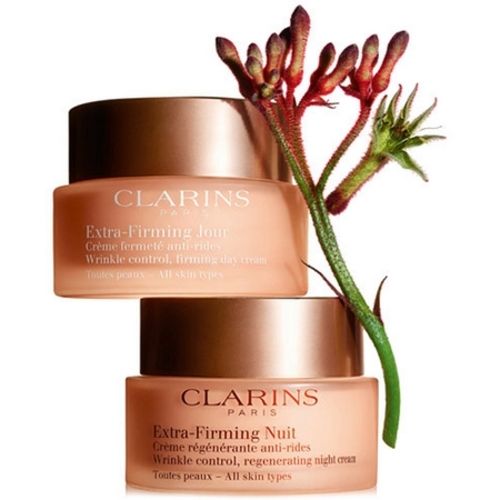
Clarins Extra-Firming: The Honest Adult Take on Firming Anti-Aging Cream
Clarins Extra-Firming has been the reference firming cream for adults over 35 for two decades. The honest assessment of what it does, what it doesn't, and where it fits in an adult routine.

Ferulic Acid for Adult Skin Over 40: The Underrated Antioxidant
Ferulic acid is the antioxidant that stabilizes vitamin C, extends UV protection, and gets ignored in mainstream skincare. The honest adult guide.