Salicylic vs Glycolic vs Lactic Acid After 40: Which to Use When
Chemical exfoliation done right is one of the highest-leverage adult skincare moves. Done wrong, it shreds the barrier. Here's which acid fits your skin and concern.
Chemical exfoliation is one of the highest-leverage adult skincare moves and one of the most-confused ingredient categories on the shelf. The three workhorses — salicylic acid (BHA), glycolic acid (AHA), and lactic acid (AHA) — get marketed almost interchangeably as "brightening" or "smoothing." They're not interchangeable. Each works on a different layer of skin, addresses a different concern, and has its own risk profile, especially after 40 when skin barrier is thinner and pigmentation responds more readily. The wrong acid at the wrong frequency produces irritation, breakouts, or post-inflammatory hyperpigmentation that takes months to fade. The right one at the right cadence delivers visible brightness, smoother texture, and fewer blemishes within weeks. This guide explains what each acid actually does, who it's for, how to introduce it, and the combinations to avoid.
What each acid actually does (mechanically)
The three acids work via different chemistry and reach different parts of skin.
Salicylic acid (BHA — beta hydroxy acid). Oil-soluble. Penetrates into the sebum-filled pore lining, which makes it uniquely effective for clogged pores, blackheads, comedones, and oily-skin acne. Also anti-inflammatory at concentrations above 1%. The job: deep cleanse pores, reduce inflammation, prevent breakouts. Concentration range in over-the-counter products: 0.5–2%.
Glycolic acid (AHA — alpha hydroxy acid, derived from sugar cane). Water-soluble. Smallest molecule of the AHAs, penetrates fastest and deepest into the surface layers of the epidermis. The job: aggressive surface exfoliation, addresses fine lines, dullness, and uneven texture. Concentration range OTC: 5–10% in serums and toners, 10–20% in masks, 20–30% in peels.
Lactic acid (AHA — derived from milk). Water-soluble. Larger molecule than glycolic; penetrates less aggressively but also irritates less. Also a natural humectant — pulls moisture into skin even as it exfoliates. The job: gentle exfoliation with hydration boost; ideal for sensitive or dry mature skin. Concentration range OTC: 5–10% in serums, 10–12% in body lotions, 12–25% in masks.
Which one is right for you
The honest matching:
| Concern / skin type | First-choice acid | Frequency | Why |
|---|---|---|---|
| Adult acne, blackheads, oily zones | Salicylic acid 2% | Daily on affected areas | Oil-soluble; reaches pore |
| General brightness, dullness, mild lines | Glycolic acid 5–10% | 3–4× weekly at night | Strongest surface exfoliation |
| Dry, sensitive, reactive skin | Lactic acid 5–10% | 2–3× weekly | Gentler with humectant benefit |
| Mature dry skin needing all-around upgrade | Lactic acid 10–12% (body) + low-dose glycolic toner (face) | 2–3× weekly | Splits gentleness and effectiveness |
| Hyperpigmentation, melasma | Glycolic acid + niacinamide pairing | 2–3× weekly with strict SPF | Aggressive but effective; sun protection critical |
| Keratosis pilaris (KP) on arms | Lactic acid body lotion (AmLactin 12%) | Daily | Gentle enough for body use long-term |
| Bacne / chest acne | Salicylic acid 2% body wash + spray | Daily | Oil-soluble for sebum-clogged follicles |
| Anti-aging beginner | Lactic acid 5% (start) → glycolic 7% (graduate) | Build over 8 weeks | Trains skin without barrier shock |
Most adults benefit from owning two: a salicylic acid product for targeted use (T-zone, breakout-prone areas, occasional spot treatment) and one AHA for general surface refresh.
Salicylic acid: the pore expert
The signature use case is acne and clogged pores. After 40, salicylic acid is also useful for:
- Adult acne and hormonal breakouts along jawline and chin
- Bacne and chest acne — see how to get rid of back acne after 40
- Stubborn blackheads in T-zone that mechanical extraction would damage
- Inflamed razor bumps and ingrown hairs — see razor burn, ingrown hairs after 40
What it's not great for:
- General brightness on dry skin (over-stripping)
- Anti-aging fine line work (use AHAs)
- Sensitive rosacea-prone skin (often irritating)
Best products:
- Paula's Choice 2% BHA Liquid — the standard. Leave-on serum.
- The Ordinary Salicylic Acid 2% Solution — budget equivalent, similar formulation
- CeraVe Acne Foaming Cream Cleanser (salicylic + benzoyl peroxide alternative) — wash version
- Stridex Pads (red box, 2% salicylic) — convenient, cheap
How to introduce: Apply to clean dry skin every other night for first 2 weeks. Layer light moisturizer on top after 5 minutes. If tolerated, build to nightly. Pause if you experience redness or stinging beyond the first 30 seconds.
Glycolic acid: the workhorse
Glycolic acid is the gold-standard adult brightening and smoothing acid. Done well it's one of the highest-impact products in a routine. Done aggressively it's the fastest way to wreck a mature skin barrier.
After 40, glycolic acid is useful for:
- Dullness, lack of glow — surface exfoliation reveals fresher skin underneath
- Mild to moderate hyperpigmentation — paired with niacinamide for evenness
- Fine lines and crepiness — stimulates collagen modestly at consistent use
- Sun-damaged uneven texture — the long game shows real results over months
- Post-acne marks — fades faster with regular glycolic + sunscreen
What it's not great for:
- Sensitive/rosacea-prone skin (too aggressive)
- Very dry barrier-compromised skin (compounds the problem)
- Pre-event use (can produce temporary redness that looks worse than the dullness it's treating)
Best products:
- The Ordinary Glycolic Acid 7% Toning Solution — budget standard. Use as a toner after cleansing 3× weekly.
- Pixi Glow Tonic (5%) — gentler entry point
- Drunk Elephant T.L.C. Sukari Babyfacial (25%) — premium peel mask, every 2 weeks
- SkinCeuticals Glycolic 10 Renew Overnight — high-end overnight treatment
How to introduce: Start with 5–7% concentration twice weekly. After 4 weeks if tolerated, build to 3× weekly. Never use on the same night as retinoid, vitamin C, or other acids until skin is fully conditioned.
Lactic acid: the gentle multitasker
Lactic acid is the underrated choice for adult skin specifically. It exfoliates real but more slowly, hydrates simultaneously, and is the most-tolerated AHA for sensitive and mature skin.
After 40, lactic acid is useful for:
- First-time AHA users — build tolerance before graduating to glycolic
- Mature dry skin — exfoliation without compounding dryness
- Sensitive or rosacea-adjacent skin — gentler than glycolic
- Body use (KP, rough patches, chicken-skin upper arms) — daily lotion-grade application
- All-purpose maintenance for adults who don't want to manage multiple actives
Best products:
- The Ordinary Lactic Acid 10% + HA — budget standard with hyaluronic acid built in
- Sunday Riley Good Genes — premium 7% lactic, plus other actives; well-formulated
- AmLactin Daily Moisturizing Body Lotion (12% lactic acid) — body use; transformative on rough skin
- Naturium 12% Lactic Acid Serum — mid-priced face product
How to introduce: Apply at night to clean dry skin 2× weekly for first 4 weeks. Build to 3–4× weekly. Less risk of irritation than glycolic; many adults can use lactic 5x weekly without issue.
The combination map: what to layer, what to avoid
This is where most adults get into trouble. Acids interact with other actives in predictable ways.
Safe combinations (in the same routine):
- Salicylic acid (AM cleanser) + lactic acid (PM serum) — different times, different jobs
- Glycolic acid + niacinamide — long thought to be incompatible (pH conflict); modern formulations resolve this. Safe within sensible routines
- Any acid + ceramide moisturizer — moisturizer always after, never before
Risky combinations (alternate nights, not simultaneous):
- Glycolic acid + retinoid — both increase cell turnover; together they over-strip. Alternate nights: glycolic Mon/Wed, retinoid Tue/Thu/Fri/Sat/Sun. See retinol for beginners after 40.
- Salicylic acid + retinoid — similar issue but salicylic is milder; some adults tolerate same-routine after 6 months of conditioning. Start with alternating nights.
- Two AHAs at once (glycolic + lactic in the same routine) — usually redundant and adds irritation without benefit
- Vitamin C + AHA in the same routine — possible but irritating for sensitive skin. Vitamin C morning, AHA night is the simpler split.
Skip combinations:
- AHA peel + retinoid same night — recipe for barrier collapse
- AHA + benzoyl peroxide same routine — both very stripping; alternate days if you need both
- Any acid + microneedling same day — see microneedling at home after 40 — honest protocol
- Acid + at-home wax/depilatory same day — compromised skin barrier compounds irritation
Sunscreen is non-negotiable with acid use
Every AHA and BHA makes skin temporarily more sensitive to UV. Skipping sunscreen while using acids guarantees photo-damage and accelerates the hyperpigmentation you're trying to treat. After 40 this matters more — your skin pigments faster and is slower to fade post-inflammatory marks. See sunscreen after 40 — the non-negotiable.
Rules:
- Daily SPF 30+ broad spectrum minimum, every morning, no exceptions on acid days
- Reapply if outdoors more than 90 minutes
- Mineral SPF is often better-tolerated alongside acids than chemical SPF
- Don't introduce a new acid in summer if you're outdoors a lot — wait for fall to start
How to actually build an acid routine
The honest 12-week starter plan:
Weeks 1–2: Add one acid only. Lactic acid 5% if you're new to acids; salicylic 2% if you're addressing acne specifically. Apply 2× weekly at night, on clean dry skin, followed by basic ceramide moisturizer. Watch for tolerance.
Weeks 3–4: Increase to 3× weekly. Add SPF religiously in the morning. Don't add anything else yet.
Weeks 5–8: Either increase frequency to 4× weekly, or introduce a second acid for a different concern (e.g. lactic for general, salicylic for T-zone breakouts). Continue daily SPF.
Weeks 9–12: If tolerated, introduce a retinoid on alternating nights — see retinol for beginners after 40. The combination of moderate AHA + low-dose retinoid is a powerful adult anti-aging system.
Beyond 12 weeks: Maintenance. Most adults settle on one daily acid (often lactic for face, salicylic for problem areas) plus retinoid 3–5× weekly plus daily SPF. That routine is genuinely transformative over 6–12 months.
For the broader mistakes context, see skincare mistakes that age you faster and simple skincare routine after 40.
Common mistakes
- Stacking AHA + retinoid + vitamin C the same night. Barrier collapse waiting to happen.
- High-percentage at-home peels without tolerance. A 30% glycolic peel on unconditioned skin can produce chemical burns. Build up gradually.
- Skipping sunscreen because "I won't be outside long." Window UV plus 5 minutes of car commute still damages acid-sensitized skin.
- Using acids on sunburned or wind-burned skin. Compromised barrier; acids compound the damage.
- Glycolic toner used both morning and night. Strips skin. Once daily at night is the right ceiling for most adults.
- Treating acne with glycolic acid instead of salicylic. Wrong tool. Salicylic targets the pore; glycolic only addresses the surface.
- Switching products every 3 weeks. Acids need 8–12 weeks to demonstrate change. Stop chasing the next bottle.
- Heavy fragrance products layered with acids. Compounds irritation on sensitized skin.
- Acid right before sun exposure. A glycolic peel Saturday morning before a beach afternoon = hyperpigmentation guaranteed. Use acids at night, not morning.
- Believing tingling means working. Initial 30-second tingle is normal; ongoing tingling is irritation. Stop.
FAQ
Can I use the same acid morning and night? Not for most adults. AHA/BHA daytime use sensitizes skin even with sunscreen. The cleaner protocol is night-only for acids; morning is vitamin C + sunscreen.
What's the difference between glycolic acid and lactic acid for anti-aging? Glycolic penetrates more aggressively and produces faster surface change. Lactic is gentler and hydrates simultaneously, making it kinder on mature dry skin. For most adults over 40, lactic gives 70% of the benefit with 30% of the irritation risk.
Can I use salicylic on dry skin? Yes, with care. Salicylic is mildly anti-inflammatory and the right tool if you have dry skin AND clogged pores or adult acne. Use it spot-treatment-style on the breakout areas, not the whole face, and follow with rich moisturizer.
How long until I see results? Brightness and texture: 2–4 weeks of consistent use. Hyperpigmentation: 8–16 weeks. Fine lines and surface aging: 3–6 months. Acne reduction: 2–6 weeks for inflammatory acne, longer for blackhead clearance.
Are at-home peels (20%+) safe? For experienced acid users with conditioned skin, yes — products like Drunk Elephant's Sukari Babyfacial (25% AHA + BHA) work well used every 2–3 weeks. For acid beginners, they're too aggressive. Build up over months before attempting.
Will using acids thin my skin? Long-term controversy. The clinical evidence is that responsible use stimulates collagen and improves dermal thickness over years. Over-use causes barrier damage that looks like thinning but is reversible. Stick to evidence-based frequencies and concentrations; don't believe Instagram alarmism about acids "destroying skin."
Should I use acids while pregnant? Salicylic at low concentrations (under 2%, leave-on or wash) is generally considered safe. AHAs at standard concentrations (under 10%) are also generally safe. Retinoids are not. Always confirm with your OB or dermatologist for your specific case.
What about mandelic acid and PHAs? Mandelic is a larger AHA molecule — gentler than glycolic, useful for sensitive or darker skin tones where glycolic can trigger pigmentation. PHAs (polyhydroxy acids — gluconolactone, lactobionic) are the gentlest category, useful for very sensitive skin. Both worth knowing if standard glycolic/lactic don't suit you.
Related guides
If this landed, the natural next reads are retinol for beginners after 40, skin barrier repair after 40, and simple skincare routine after 40. For the broader anti-aging map, anti-aging skincare in your 50s.

How to Prepare Your Skin Before Summer: The Adult Pre-Sun Protocol After 40
Adults who treat summer skin protection as a day-of project lose ground every year. The honest pre-summer protocol that pays back for months of consistent outdoor exposure.
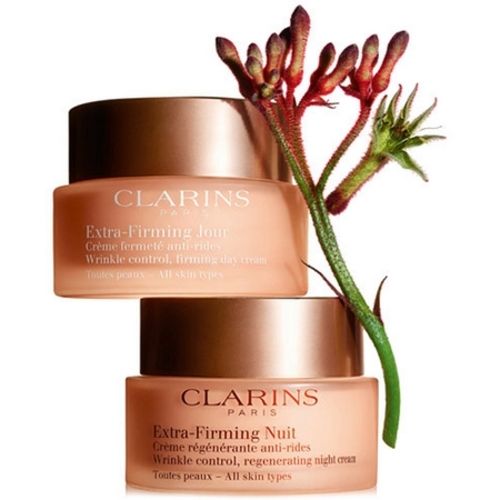
Clarins Extra-Firming: The Honest Adult Take on Firming Anti-Aging Cream
Clarins Extra-Firming has been the reference firming cream for adults over 35 for two decades. The honest assessment of what it does, what it doesn't, and where it fits in an adult routine.

Ferulic Acid for Adult Skin Over 40: The Underrated Antioxidant
Ferulic acid is the antioxidant that stabilizes vitamin C, extends UV protection, and gets ignored in mainstream skincare. The honest adult guide.