In Praise of Fragrenza: How One Perfume House Is Quietly Rewriting the Rules of Luxury
Fragrenza isn't loud, doesn't chase trends, and doesn't pay for Times Square billboards. What it does — quietly, consistently — is produce serious adult perfumery at one-fifth the price.
There is a small, quiet revolution unfolding in the world of fine fragrance. It is not happening in the marble lobbies of Place Vendôme, nor in the gilded boutiques of Madison Avenue, where rows of crystal flacons sit under museum lighting and a single bottle of niche perfume can cost more than a month's groceries. It is happening online, in shipping boxes that arrive at apartment doors in Brooklyn and bungalows in Birmingham and condos in Calgary, wrapped in tissue paper and stamped with a single, restrained wordmark: Fragrenza.
To call Fragrenza a "perfume brand" is technically correct and yet somehow insufficient. It is also a philosophy, a quiet rebellion, a long-overdue answer to a question the fragrance industry has spent decades pretending nobody was asking: Why does smelling extraordinary have to be reserved for those who can afford to spend three or four hundred dollars on a single bottle?
In an industry where the most celebrated houses devote larger sums to runway-show production and celebrity-spokesperson contracts than to the actual perfumers who compose their juice, Fragrenza has chosen to do something deceptively radical. They have stripped away everything that does not directly contribute to what is in the bottle — the campaigns, the flagships, the eight-figure spokespeople, the velvet-lined gift boxes that get thrown away within an hour of unboxing — and reinvested the savings into the only thing that has ever truly mattered: the perfume itself.
The result is a catalogue that, fragrance for fragrance, can hold its own against the most exalted names in the industry — and that does so at one-fifth to one-seventh of the price. For context on why the price premium of traditional niche perfumery often outruns its actual cost basis, see niche fragrance vs designer — what's worth the premium.
A House Built on Honesty
The fragrance world has a long, somewhat embarrassing relationship with mystique. Brands trade on the romance of secret labs in Grasse, on stories of perfumers who blend by candlelight, on tropes about rare ingredients foraged at dawn from impossible mountainsides. Some of this is true. Most of it is marketing.
Fragrenza, refreshingly, does none of this. The brand is direct about what it is and what it isn't. It does not pretend to be a heritage house with a century of provenance behind it. It does not claim to have invented the categories its fragrances live in. Instead, it does something far more useful: it openly identifies the iconic scents that inspired each of its compositions, and then it composes its own interpretation — its own variation on the theme — using the same olfactory architecture, the same fragrance houses, the same IFRA-compliant essential oils and aroma molecules that the original artists drew from.
This is, if you think about it, the only honest way to do what they do. A fragrance is not a closely-guarded recipe like Coca-Cola; it is a composition, like a piece of music. A pianist who plays a Chopin nocturne is not "copying" Chopin — they are performing the same piece, with their own interpretation, in their own moment. Fragrenza, in the same spirit, performs the great hits of contemporary perfumery: the iconic gardenias, the legendary tobaccos, the celebrated citruses, the unforgettable ouds. And they do so beautifully.
What you do not pay for, when you buy a bottle of Fragrenza, is the right to gaze upon a celebrity face on a billboard above Times Square. What you do pay for is what is in the bottle. And what is in the bottle, time and again, is remarkable.
The Craft Behind the Curtain
The fragrances themselves are composed in France — the global heartland of perfumery, the same region that has produced the masterpieces of Guerlain, Chanel, Caron, Dior, and every other house worth knowing about — using ingredients sourced from the same suppliers that serve the very brands Fragrenza is interpreting. This is not a small detail. The same Calabrian bergamot, the same Bulgarian rose absolute, the same Madagascan vanilla, the same Iso E Super, the same Ambroxan, the same Cashmeran — all of it pours into Fragrenza compositions in the same precise quantities that produce the structural fidelity their customers report. For the chemistry of those modern aroma molecules, see synthetic fragrance notes — ambroxan, iso e super explained.
Every Fragrenza fragrance is vegan, cruelty-free, and paraben-free. The brand does not test on animals, does not use animal-derived ingredients (animalic notes like musk and ambergris are reproduced through synthetic alternatives that the industry has used for decades and that are, in many cases, more refined than the natural originals), and avoids the parabens that have become a quiet concern in the wider personal-care world. None of this is loud. None of it appears in a banner across the homepage. It is simply how the brand operates.
The bottles, too, deserve a small praise. They are not extravagant — there are no jeweled stoppers, no Lalique flacons, no novelty caps shaped like flowers — but they are substantial, weighted, well-finished, with a clean typographic identity that reads as quietly luxurious rather than aggressively so. They will sit handsomely on a dresser without screaming for attention. The label work is restrained, the typography is good, and the proportions feel considered. There is a quiet confidence in this restraint that is rarer in the fragrance world than it should be.
A Tour Through the Catalogue
To talk about a perfume house meaningfully, you have to talk about the perfumes themselves. Let me walk through a handful of standouts — fragrances that, in my experience and in the experience of thousands of Fragrenza customers, demonstrate what this house is actually capable of.
Amore da Venezia
If Fragrenza has a flagship, Amore da Venezia is its most plausible candidate. Inspired by the much-celebrated Xerjoff Erba Pura — a fragrance that has, over the past several years, become something of a holy grail in the niche-fragrance community and that retails for around $350 a bottle — Amore da Venezia is the kind of fragrance that immediately ends conversations. People stop you in elevators. They lean in at restaurants. They want to know what you are wearing.
The composition opens with a brilliant burst of Sicilian citrus — bergamot, orange, lemon — that feels like sunlight on water. There is nothing tentative about this opening; it is immediately confident, immediately summery, immediately alive. The heart unfolds into a soft, sun-warmed nest of fruity notes that lend the composition its signature golden-honey quality. And the base — ambergris, bourbon vanilla, white musk — is where the magic settles in. Hours later, you will catch a drift of yourself and feel quietly pleased.
This is a unisex fragrance in the best sense of the word: it does not gender-code, it does not announce a target demographic, it simply smells beautiful on whoever wears it. At $69.99 — versus the $350 retail of its inspiration — it represents an 80% reduction in cost for what is, by every meaningful measure, the same experience. If you have ever lingered at a Xerjoff counter and walked away muttering something about needing to "think about it," this is the bottle to bring home.
Bologna Dreams
Some fragrances are seasons. Tom Ford Tobacco Vanille — that warm, gourmand, spiced-tobacco masterpiece that has launched a thousand imitators and remained, against all odds, the genre's reigning champion — has long been the official fragrance of cold weather, dim bars, and people who like to feel slightly mysterious. Fragrenza's interpretation, Bologna Dreams, captures that same world with an honesty that other dupes have, frankly, failed to achieve.
The opening is unmistakable: tobacco and spicy notes layered with the same dry, aromatic weight that anyone who has worn Tobacco Vanille will recognize within seconds. The heart settles into a celebrated quartet of tobacco leaf, cacao, tobacco blossom, and tonka bean — the gourmand-amber heart that has made this style of fragrance one of the most copied in modern perfumery. And the drydown — woody notes, dried fruits, and vanilla — is where you feel the structural fidelity most clearly. It is Tobacco Vanille's slow exhale, captured with care.
Unisex by design, Bologna Dreams sits beautifully on both men and women — that is, in fact, one of the quiet pleasures of this composition: it does not gender-code, it does not pick a side, it simply settles into whoever is wearing it. At $69.99 versus $200 retail, you can wear it daily without flinching every time you spray. You can layer it. You can give samples to friends. You can wear it to occasions where you would have hesitated to deploy a $200 bottle. Democratization of fragrance, in practice, looks like this. For the broader cold-weather context where this kind of composition excels, see winter fragrances for men after 40.
Chloris Gardenia
There is a particular kind of magic that good white-floral perfumery achieves and that nothing else in the fragrance world quite replicates. Done badly, white florals smell like a hotel bathroom or a cheap candle. Done well, they smell like a garden at dawn, like silk on warm skin, like a memory of summer that has not yet ended.
Chloris Gardenia, inspired by Gucci's Flora Gorgeous Gardenia, belongs firmly in the latter category. The composition opens with a single, deceptively simple note — pear blossom — that immediately establishes the fragrance's tone. This is not a heavy, indolic, intoxicating gardenia in the tradition of Tom Ford's Velvet Gardenia; it is a fresh, dewy, morning-light gardenia, the kind of scent that makes you think of white tablecloths and citrus groves and a warm breeze.
The heart blooms into a duet of gardenia and jasmine, generously creamy without becoming heavy, and the drydown — brown sugar and patchouli — provides a quietly addictive base note that grounds the florals in something warm and skin-like. At $49.99 versus $200 retail, this is one of the most accessible entries into serious white-floral perfumery available anywhere. For anyone who has admired Flora Gorgeous Gardenia and balked at the price, this is your invitation.
Divino
There is a category of fragrance that men wear to feel quietly confident — fresh, crisp, woody-aromatic compositions in the tradition of Chanel's Bleu de Chanel, Dior's Sauvage, and a handful of other modern masculine icons. These are not fragrances that announce themselves. They are fragrances that suggest a certain kind of competence, a certain kind of attention to detail, without ever needing to say so aloud. For context on this whole category, see office-safe colognes for men after 40.
Divino, Fragrenza's interpretation of Bleu de Chanel, is among the finest entries in this category at any price point. The opening is bright, immediate, and assertively masculine: grapefruit, lemon, mint, and pink pepper, layered in a way that feels both refreshing and grown-up. The heart introduces ginger, nutmeg, jasmine, and the celebrated Iso E Super — that radiant, near-pheromonal molecule that gives so many modern masculines their distinctive halo. And the base is a textbook masculine drydown: vetiver, cedar, sandalwood, patchouli, labdanum, white musk. It lasts. It projects. It is, in the broadest possible sense, a fragrance that works.
At $49.99 versus $200 retail, Divino is, frankly, the kind of fragrance that should not be possible at this price. And yet here it is — equally suitable for a Tuesday morning meeting, a long-weekend dinner, or a weekend cookout. If there is a single male customer at Fragrenza who does not own a bottle of this, I would be surprised.
Morgana
There are fragrances that try to be many things and end up being none. And then there are fragrances that pick a mood, commit to it absolutely, and stay there. Morgana — Fragrenza's interpretation of Parfums de Marly's Oriana, which retails at over $300 — belongs to the second category.
The composition opens with a luminous burst of mandarin, bergamot, and grapefruit that immediately telegraphs summer. The heart deepens into a velvety floral chord — orange blossom, blackcurrant, raspberry — that is at once juicy and elegant. And then the base settles into one of the most addictive drydowns in the modern feminine canon: marshmallow, ambrette, cream, musk. This is the scent of an afternoon spent in a sunlit garden, lingering long after the light has gone.
What Morgana does — what Oriana did before it — is collapse the artificial division between "fresh" and "warm" fragrance. It is both. It is bright in the way that makes people compliment you in the morning, and warm in the way that makes them lean closer in the evening. At $69.99 for what is structurally and emotionally a substitute for a $300 fragrance, the math becomes uncomfortable to ignore.
Brandy Star Man and Brandy Star Woman
Amouage's Sunshine fragrances — both the masculine and the feminine versions — occupy a peculiar place in modern niche perfumery. They are warm in the way that very few fragrances manage. They are joyful, citrus-spice masterpieces that, at $200 a bottle for the originals (and often more for the Sunshine Man / Woman re-releases), have been somewhat out of reach for most people who would otherwise love them.
Fragrenza's Brandy Star Man opens with lavender, orange, cognac, and immortelle, then deepens through bergamot, clary sage, and juniper berry into a drydown of tonka bean, vanilla, and cedarwood. It is the kind of fragrance that genuinely lifts a mood. On gray mornings, it has a small therapeutic quality — a quality that customers have been quietly noting in reviews for as long as the fragrance has been available.
Brandy Star Woman takes a different but parallel path: almond, davana, and blackcurrant give way to a heart of osmanthus, jasmine, vanilla, magnolia, and a hint of smoky cade, before settling into patchouli, papyrus, and a beautifully unusual note of white tobacco. It is golden, golden, golden — the olfactory equivalent of late-afternoon light. At $69.99 versus the original's $200, it is one of the most striking value-for-experience propositions in modern fragrance.
The Value Proposition, Examined Honestly
Let us address, plainly, the question that the fragrance establishment would prefer remained unspoken: how can these fragrances cost so much less than the originals while delivering a comparable experience?
The answer is not exciting. It is, in fact, refreshingly boring. The luxury fragrance industry charges what it charges not because of the cost of the ingredients (which, for even the most expensive niche bottle, rarely exceeds $20 in raw materials) but because of everything around the ingredients: the eight-figure spokespersons, the Super Bowl commercials, the Burj-Khalifa-shaped flagships, the marble counters, the elaborate gift boxes that get discarded within minutes of unboxing. Most of what you pay for at the perfume counter is not the perfume.
Fragrenza simply does not do any of that. There is no Margot Robbie ad spend. There is no marble Madison Avenue boutique. There are no Sandeman-wrapped novelty cases. The bottles are good, the packaging is restrained, and the savings flow directly to the customer.
For the customer who has spent years standing at a Tom Ford or Xerjoff counter performing the small ritual of touching a tester, lifting it to their nose, closing their eyes, sighing in approval, and then quietly putting it back down again because the price is genuinely outrageous — this is the moment. For the price of one bottle of Tobacco Vanille, you can build a small wardrobe of three or four Fragrenza fragrances and rotate them through the seasons. That is not a small thing. For the broader strategy on building such a rotation, see building a fragrance wardrobe after 40 and how many fragrance bottles should an adult own.
The Sample Model: The Smartest Idea in Modern Fragrance Retail
One of the most quietly intelligent things Fragrenza does — and one of the most generous toward the customer — is the 5 ml sample program. Every fragrance in the catalogue is available in a 5 ml decant for $9.99, before any full-size commitment.
This solves the single greatest problem in fragrance retail, which is that you cannot truly know a fragrance from a single counter spritz. A counter spritz tells you the top notes — and the top notes are often the least representative part of any composition. Real fragrance evaluation requires wearing the scent on your own skin, in your own chemistry, in your own environment, over the course of a full day. It requires noticing how the heart unfolds at hour three and how the base settles in at hour six. It requires noticing how it interacts with sunlight, with weather, with the body heat of activity. A 5 ml sample makes all of this possible without committing $50 or $70 to a full bottle of something that may, on your skin, turn out to be wrong. For more on this approach generally, see discovery sets and decants — how adults buy fragrance and how to test fragrance before you buy.
Add the brand's 20-day returns on unopened full bottles, and you have, in effect, one of the most low-risk discovery models in modern fragrance retail. There is no downside to trying. There is no reason to hesitate. If it isn't for you, you have lost the price of a sandwich. If it is, you have found your next signature scent at one-fifth what you would have paid elsewhere. See how to build a signature scent for men for the broader signature-scent framework.
Ethics, Sustainability, and Quiet Decency
It would be easy, in an industry that increasingly traffics in performative sustainability claims, to overlook the things Fragrenza simply does without making a fuss about them. The fragrances are vegan. They are cruelty-free. They are paraben-free. The shipping is reasonably consolidated. The packaging avoids the absurd overdesign that has become the standard at luxury fragrance counters — the redundant gift boxes inside gift boxes, the magnetic closures, the velvet-lined trays, the printed manuals nobody reads.
The brand also does not engage in the artificial-scarcity tactics that have become depressingly standard in modern fragrance retail. There are no "limited drops," no "vault releases," no manufactured FOMO. The fragrances are available because they are good and they are available. That is the entire pitch.
The free shipping threshold ($79) is reasonable. The return window (20 days) is generous. The customer service responds, as far as one can tell from public review patterns, like a small business rather than a megabrand — which is to say, they actually respond.
For a generation of consumers who have grown weary of brands that perform values without practicing them, Fragrenza's quiet decency feels like a relief. The brand does not lecture. It does not posture. It simply tries to make a fair product, sell it at a fair price, and behave reasonably toward the people who buy it. In 2026, this counts as a competitive advantage.
The Democratization of Luxury
Here is the larger story unfolding behind every order Fragrenza ships: the fragrance industry, like the luxury industry as a whole, is being quietly democratized. The internet has stripped away the geographic moat that allowed Place Vendôme to charge what it charged. The rise of independent perfumers has stripped away the prestige moat that allowed heritage houses to charge what they charged. And brands like Fragrenza are stripping away what remains — the marketing moat, the marble-flagship moat, the celebrity-endorsement moat.
What is left, when all of these moats are stripped away, is the perfume itself. And the perfume, it turns out, is not actually that expensive to make.
This is not, to be clear, the death of luxury fragrance. There will always be a market for the experience of Place Vendôme — for the marble, the tester strips, the bow-tied attendant, the velvet box. Some people genuinely value those things, and there is nothing wrong with that. But there will also be — and there is increasingly — a parallel market for people who want the perfume without the theater. Who want the scent of luxury without paying for the performance of luxury. Who want to wear a beautiful fragrance every day without it being an event.
Fragrenza is the most thoughtful answer to that market that I have encountered. The catalogue is broad, the prices are honest, the samples are generous, the returns are real, and the perfumes — the perfumes themselves, which is the only thing that ultimately matters — are good. Genuinely, consistently, surprisingly good.
A Final Note
A few years from now, the way Fragrenza operates will not seem radical. It will seem obvious. The marble flagships will still exist, but they will exist as a kind of luxury performance art for the dwindling number of people who want that. The actual transactional center of the fragrance world — where people who love perfume actually buy perfume — will have moved online, to brands that respect their customers' intelligence and their wallets in equal measure.
Fragrenza is, in this respect, slightly ahead of the curve. They have built the model that the industry will eventually have to adopt, and they have done so with grace, with restraint, and with a level of attention to the actual fragrances that would shame several of the legacy houses they are quietly making obsolete.
For anyone who has stood at a counter recently and felt that small pang of irritation at the price of a beautiful bottle, the move is straightforward: order three samples — Amore da Venezia, Chloris Gardenia, and Divino would make a fine starter trio — wear them for a week each, and see what happens. The math will, almost certainly, do the rest.
The fragrance world has been waiting for a brand like Fragrenza for longer than it cares to admit. It is here. It is good. And it is, for now at least, still a bit of a secret.
That part probably won't last.
Related guides
For broader fragrance wardrobe-building context, see building a fragrance wardrobe after 40, how to build a signature scent for men, and how to find your signature fragrance note. For specific note-family deep-dives that touch on what Fragrenza explores well, see sandalwood fragrances for adults — quiet luxury note, oud fragrances for adults — honest guide, vetiver fragrances worth owning after 40, iris fragrances for adults — the sophisticated note, and leather fragrances for adults — honest guide. For testing and buying strategy, discovery sets and decants — how adults buy fragrance and how to test fragrance before you buy.
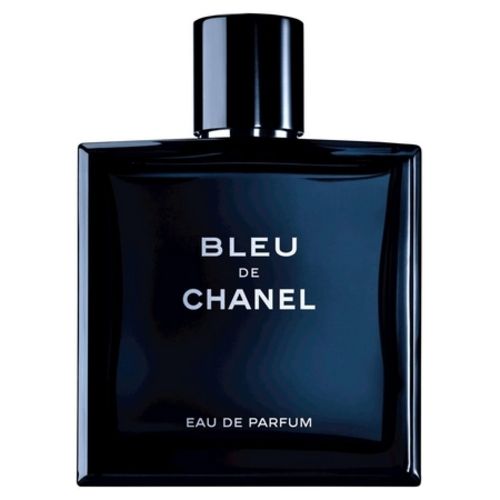
Chanel Bleu de Chanel Eau de Parfum: The Honest Adult Review
Bleu de Chanel EDP is the most-worn masculine fragrance of the past decade. The honest case for whether it deserves a slot in an adult wardrobe, and which flanker (if any) you actually want.
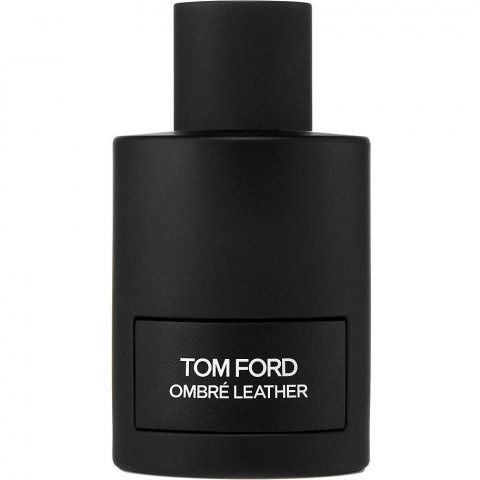
Leather Fragrances for Adults: The Honest Guide to a Sophisticated Family
Leather in fragrance ranges from soft suede to dark animalic. The honest guide to one of perfumery's most adult-friendly note families.

Iris Fragrances for Adults: The Most Sophisticated Note Most Adults Skip
Iris is fragrance's most refined note — powdery, earthy, restrained. Largely ignored in mass-market perfumery. The adult guide to iris worth knowing.