Combination Skin After 40: The Mix That Confuses Most Routines
Most adult routines target oily OR dry; combination skin gets both wrong. The honest framework for zone-specific care that respects both your T-zone and your dry cheeks.
Combination skin — oily through the T-zone (forehead, nose, chin) and dry or normal on the cheeks and jawline — is the most common adult skin type and the worst-served by routines designed for either "oily" or "dry" categories. After 40 the combination pattern often intensifies as estrogen drops (in women) or testosterone shifts (in men), creating drier cheeks while sebum production persists in the T-zone. The wrong routine treats the whole face like one or the other, producing T-zone breakouts on a "for dry skin" regimen or papery dry cheeks on a "for oily skin" regimen. The honest fix is zone-specific care: different products or different applications for different parts of the face, recognizing that adult facial skin isn't uniform. This guide covers what combination skin actually is biologically, the zone-by-zone routine that works, the active ingredients that work across the combination, and the specific picks that don't strip the cheeks or over-feed the T-zone.
What combination skin actually is
The biology:
Sebaceous glands aren't uniform. Face skin has roughly 400-900 sebaceous glands per square centimeter on the forehead and nose, vs 50-100 per square centimeter on the cheeks. This anatomical difference creates the combination pattern naturally.
T-zone (forehead, nose, chin):
- Higher sebum production
- Larger pores
- More likely to develop blackheads, acne
- Often appears shiny midday
Cheeks, jawline, around eyes:
- Lower sebum production
- Smaller pores
- More likely to develop dryness, fine lines
- Often feels tight after washing
After 40 specifically:
- T-zone may produce less sebum than at 25 but still more than cheeks
- Cheeks become drier as estrogen and skin lipid production drop
- The contrast between zones often intensifies
- Old "oily skin" routines now over-strip the cheeks
- Old "dry skin" routines now over-feed the T-zone
For the broader hormonal context, see skincare for menopause — what changes and what helps and skincare for men after 40 — what's different.
The honest combination skin routine
The framework:
Cleansing (treat as one):
- Use a gentle cleanser appropriate for the drier areas
- Aggressive cleansers strip the cheeks; mild cleansers leave T-zone oil
- The compromise: a balanced gentle cleanser plus T-zone-specific exfoliating treatment 2-3× weekly
Toner/essence:
- Optional; hydrating toner if used
- Don't use astringent toners that target only oily skin
Treatment serums (here's where zone differences emerge):
- Vitamin C — face-wide
- Niacinamide — face-wide (regulates sebum and helps barrier)
- BHA (salicylic acid) — T-zone targeted only
- Retinoid — face-wide but with extra moisturizer on cheeks
- Hyaluronic acid — face-wide
Moisturizer (zone-specific):
- Lighter formulation on T-zone
- Heavier formulation on cheeks
- OR: medium moisturizer all over with extra layer on cheeks
Sunscreen:
- Same product face-wide
- Lighter mineral or chemical that doesn't clog T-zone but covers cheeks
The full morning sequence for combination skin:
- Cleanse with gentle cleanser
- Niacinamide serum (face-wide)
- Vitamin C serum on cheeks (skip T-zone if oily)
- Lightweight moisturizer face-wide
- Extra rich layer on cheeks
- SPF face-wide
Night:
- Cleanse (double cleanse if wore SPF)
- Salicylic acid on T-zone (2-3× weekly)
- Retinoid face-wide (alternating nights)
- Hyaluronic acid face-wide
- Lightweight moisturizer face-wide
- Extra rich cream on cheeks
For broader layering context, see how to layer skincare products after 40.
Zone-specific picks
For T-zone (oily) areas:
- Paula's Choice 2% BHA Liquid — salicylic acid for clogged pores
- The Ordinary Niacinamide 10% + Zinc 1% — regulates oil
- EltaMD UV Clear SPF 46 — lightweight, oil-free, ideal for T-zone
- Lightweight gel moisturizer (Neutrogena Hydro Boost) for T-zone if you need separate
For cheek (dry) areas:
- CeraVe PM Facial Moisturizing Lotion — ceramide-rich
- First Aid Beauty Ultra Repair Cream — heavier for dry cheeks
- Squalane oil as last step on dry cheeks
- The Ordinary Hyaluronic Acid 2% + B5 — hydration without weight
Face-wide products that work for both:
- Cleanser: CeraVe Hydrating Cleanser, Vanicream Gentle Facial Cleanser
- Vitamin C: Skinceuticals CE Ferulic or budget alternative
- Retinoid: Adapalene (Differin) or retinol
- Sunscreen: Look for "for combination skin" labeled products
For broader product context, see simple skincare routine after 40 and how to read skincare ingredient lists after 40.
The midday T-zone touch-up
A combination-skin-specific habit: addressing T-zone shine at midday.
Quick fix (1 minute):
- Blotting papers (Tatcha Aburatorigami or generic) on T-zone — removes oil without disturbing makeup or SPF
- Light dusting of mineral powder if you wear makeup
- Skip applying more moisturizer in T-zone
Skip these:
- Re-cleansing — strips skin, triggers more oil production
- Heavy powder — looks cakey and clogs
- Spraying water on face — adds moisture briefly but evaporates and triggers more oil
For broader morning routine context, see adult male morning routine.
Common mistakes
- Treating the whole face like the T-zone. Strips cheeks, makes them paper-dry.
- Treating the whole face like the cheeks. T-zone gets oily and breaks out.
- Heavy moisturizer everywhere. T-zone clogs.
- Mattifying primer everywhere. Cheeks get cardboard-dry.
- Skipping moisturizer on T-zone to "control oil." Strips skin; triggers compensatory oil production.
- Heavy occlusive (slugging) on T-zone. Clogs; causes breakouts.
- Same products morning and night. Day needs SPF + lighter base; night needs treatment + heavier moisture.
- Believing you need separate skincare for combination. Most adults can use the same products across face with zone-specific applications.
- Switching to "dry skin" products as you age, ignoring T-zone persistence. T-zone keeps producing oil; cheeks just dry out more.
- Skipping cheek moisturizer because face feels oily. Cheeks need moisturizer regardless of T-zone behavior.
How combination skin changes seasonally
The combination pattern shifts through the year:
Summer:
- T-zone produces more oil (heat + humidity)
- Cheeks may produce slightly more sebum but still less than T-zone
- Need lighter products face-wide; light SPF
- More T-zone blotting
Winter:
- T-zone produces less oil (cold dries everyone)
- Cheeks become much drier
- Need richer products on cheeks
- T-zone may need less salicylic acid
- More hydration face-wide
Transitions:
- Adjust gradually — sudden product changes upset skin
- Two weeks of mixed lighter/heavier products as you transition seasons
For broader seasonal context, see skincare while traveling after 40.
When combination becomes "dehydrated"
A common confusion: "dehydrated skin" looks similar to combination but is different.
Dehydrated skin (any skin type can be):
- Lacks water, not oil
- Often results from over-stripping
- Can affect T-zone (which still produces oil but is also dehydrated)
- Treated with hyaluronic acid and reduced harsh products
True combination:
- Inherent difference in oil production between zones
- Doesn't fix with hydration alone
- Manage long-term
Many adults thinking they have combination skin actually have dehydrated skin from over-using harsh products. Test: use only gentle hydrating products for 2 weeks. If oiliness improves dramatically, the issue was dehydration. If T-zone still produces oil but cheeks are now better, it's combination.
For broader hydration context, see hydration and how it affects skin and smell.
FAQ
Should I use different cleansers for different zones? Generally no — too complicated for daily use. A single gentle cleanser works face-wide. Add weekly BHA treatment for T-zone if needed.
Can I use a clay mask on just my T-zone? Yes — perfect application. Apply clay mask only to forehead, nose, chin. Avoid cheeks. Once weekly.
Will retinoid help my T-zone breakouts and my cheek dryness? Yes, both. Retinoid regulates oil production (helps T-zone) and supports skin renewal (helps cheek texture). Start slowly; use extra moisturizer on cheeks.
Does combination skin disappear with age? Sometimes shifts. As estrogen drops post-menopause, many women's T-zones produce less oil; combination becomes "dry with slight T-zone tendency." Men's combination often persists longer.
Can I use heavy night cream on T-zone occasionally? Yes, for very dry winter nights. Light occasional use won't cause issues. Daily heavy cream on T-zone causes problems over weeks.
Should I use mattifying products on T-zone? Use sparingly. Mattifying primers, powders, and treatments work briefly but often over-strip if used daily. Better: niacinamide serum to regulate oil; blotting paper for emergencies.
Why does my T-zone get more oily after I use astringent toner? Compensatory oil production. Skin is stripped, glands produce more oil to compensate. Switch to gentle hydrating toner.
Does diet affect combination skin? Marginally. High sugar and dairy worsen acne for many adults (T-zone effect). Overall hydration and balanced diet help skin barrier (cheek effect). Not transformative but real.
Does stress affect the combination pattern? Yes. Cortisol elevation increases sebum production in the T-zone and impairs barrier function in dry cheek areas — so stress amplifies both sides of combination skin simultaneously. The "I had a stressful month and my skin went haywire" pattern is biochemically real. See how stress affects skin and smell.
Can I use a face oil if I have combination skin? Yes, applied carefully. Light non-comedogenic oils (squalane, jojoba, rosehip) work on cheeks. Avoid coconut and heavy oils on T-zone. For most adults, a few drops on cheeks only at night is the right combination application — provides barrier support where you need it without clogging where you don't.
How quickly will I see results from a zone-specific routine? T-zone improvements (less shine, fewer breakouts) typically show in 2-4 weeks. Cheek improvements (less tightness, better hydration) appear in 1-2 weeks. Sustained results from consistent zone-specific care compound over 3-6 months.
Related guides
If this landed, the natural next reads are skincare for oily skin after 40, skincare for dry skin after 40, and simple skincare routine after 40. For the broader actives, salicylic vs glycolic vs lactic acid after 40.

How to Prepare Your Skin Before Summer: The Adult Pre-Sun Protocol After 40
Adults who treat summer skin protection as a day-of project lose ground every year. The honest pre-summer protocol that pays back for months of consistent outdoor exposure.
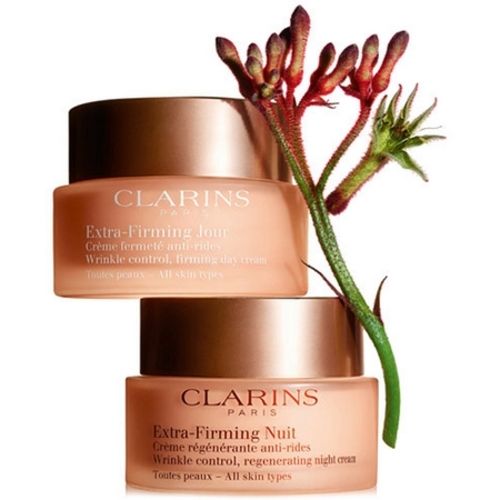
Clarins Extra-Firming: The Honest Adult Take on Firming Anti-Aging Cream
Clarins Extra-Firming has been the reference firming cream for adults over 35 for two decades. The honest assessment of what it does, what it doesn't, and where it fits in an adult routine.

Ferulic Acid for Adult Skin Over 40: The Underrated Antioxidant
Ferulic acid is the antioxidant that stabilizes vitamin C, extends UV protection, and gets ignored in mainstream skincare. The honest adult guide.