Sunscreen Reapplication for Adults After 40: The Hardest Skincare Rule to Follow
Morning SPF is the easy part. Reapplication is what almost everyone skips. The honest guide to when it actually matters and how to make it sustainable.

Most adults learned that daily sunscreen matters somewhere between 35 and 45 — and now apply it most mornings as part of their skincare routine. The harder rule, the one nearly everyone breaks, is reapplication. Dermatologists say every two hours of sun exposure. Almost no adults actually do this. The reasons are practical (you've put on makeup, you're at work, your face is already covered in moisturizer and concealer), social (reapplying sunscreen on your face in public feels weird), and conceptual (most adults don't believe SPF degrades during indoor or partial-sun days). But the reapplication gap is where most "I wear sunscreen every day and still got sun damage" stories come from. By 11 AM, the SPF you applied at 7 AM is doing 30-50% of its rated protection. By 1 PM, it's mostly cosmetic. This guide explains when reapplication actually matters (it's not always), why standard reapplication advice fails for adult life, the products and methods that make it sustainable, and how to keep sun protection working through a real adult day rather than just at breakfast.
Why morning SPF isn't enough
Three reasons single-application sunscreen fails to provide all-day protection:
Sunscreen physically degrades. UV exposure breaks down the active ingredients (chemical sunscreens like avobenzone) over hours. By 2 PM, an avobenzone-based SPF applied at 7 AM is significantly degraded even if you've been mostly indoors.
Sweat, touch, and friction remove it. Wiping your face, touching forehead, glasses friction, masks, exercise — all physically remove sunscreen from skin within hours of application.
Skin absorbs and processes it. Some sunscreen ingredients are absorbed into the skin or metabolized over time, reducing the protective film on the surface.
Standard 2-hour reapplication advice is based on continuous outdoor exposure. For typical adult life (mixed indoor/outdoor), the optimal cadence is different — sometimes longer between reapplications, sometimes shorter depending on the day.
For the broader sunscreen foundation, see sunscreen after 40 — the non-negotiable.
When reapplication actually matters
The honest dermatological perspective:
High-priority reapplication days:
- Beach, pool, water activity (every 80 minutes, more often if swimming)
- Skiing, snow sports (snow reflects UV; reapply every 90 minutes)
- Hiking, outdoor sports, gardening, golf (every 2 hours)
- Long outdoor lunch or events
- Driving extended periods (UV passes through car windows)
- High-altitude travel (UV stronger at altitude)
Medium-priority reapplication:
- Office worker spending lunch outdoors
- 15+ minute walks to public transit
- Outdoor commutes (biking, walking to/from car in lot)
- Patio dining
- Indoor work near large unfiltered windows
Lower priority but still worth considering:
- Standard indoor office work with no significant window exposure
- Cloudy day with mostly indoor activity
- Evening events that started after sunset
The "every 2 hours regardless" rule is overkill for most adults' actual day. The "morning SPF only is fine" approach underestimates real exposure. The right answer is between, and depends on what your day actually looks like.
The honest reapplication schedule
For most adults with mixed indoor/outdoor lives:
Initial application: Morning routine, 15-20 minutes before sun exposure or going outside.
Mid-day reapplication: Around noon to 1 PM, especially if outdoor lunch or significant outdoor exposure happened.
Late afternoon: Around 3-4 PM if outdoor activity is planned in late afternoon or evening.
Workout/activity: Immediately before and after outdoor exercise.
That's typically 1-3 reapplications per day depending on lifestyle. Most desk workers can manage with 1-2; outdoor workers or active adults need 3-4.
For the broader routine integration, see morning vs night skincare routine after 40.
Why most adults skip reapplication
The barriers are practical:
Makeup interference. Reapplying lotion or cream SPF over makeup creates pilling, sliding, and visible mess. Most adults give up rather than redo their face.
Workplace awkwardness. Pulling out a tube of sunscreen at the desk feels strange. Most adults wouldn't do it.
Storage friction. SPF requires keeping a separate product accessible. Many adults don't carry skincare during the day.
Lack of awareness. Most adults underestimate how much UV exposure they actually get during a typical day.
Effort fatigue. A complex morning routine is already a lot. Adding reapplications often falls off.
The good news: modern reapplication formats address most of these barriers. The honest reapplication strategy isn't "do exactly what the dermatologist says" — it's "find a format that works for your life and use it consistently."
Reapplication products and formats
The five main reapplication formats, ranked by adult-male practicality:
1. Powder sunscreen (mineral)
- Best for: over makeup, between meetings, at desk
- Brush-on application via twist-up pen
- No mess, easy to carry, no visible residue
- Examples: Colorescience Sunforgettable, Brush On Block, Supergoop Invincible Setting Powder
- Cost: $35-50 for 3-6 months of use
- Honest limit: provides less SPF coverage than full-coverage lotion. Best as supplement, not replacement.
2. SPF mist/spray
- Best for: body, scalp, neck
- Quick application
- Some pilling on face if applied over heavy makeup
- Examples: Supergoop! (Re)setting Refreshing Mist, Coola Setting Spray
- Cost: $25-40 for 2-3 months
- Honest limit: easy to under-apply; coverage can be uneven
3. Stick sunscreen
- Best for: spot reapplication (nose, ears, scalp part)
- Compact, fits in pocket
- Direct application over makeup works for small areas
- Examples: Supergoop! Glow Stick, EltaMD UV Stick, Shiseido Clear Sunscreen Stick
- Cost: $25-40 for 3-6 months
- Honest limit: best for face spot use, not full face reapplication
4. Tinted SPF
- Best for: replacement of mid-day foundation/light makeup
- Functions as both touch-up and color
- Examples: EltaMD UV Tinted, Supergoop Unseen Sunscreen, ILIA Super Serum Skin Tint
- Cost: $35-60 for 3-4 months
- Honest limit: depends on color match
5. SPF lotion (traditional)
- Best for: pre-makeup application or makeup-free days
- Most effective coverage per gram
- Best face protection of all formats
- Examples: La Roche-Posay Anthelios, EltaMD UV Clear, Supergoop Unseen
- Cost: $30-40 for 2-3 months
- Honest limit: difficult to reapply over makeup
Recommended kit:
- One traditional SPF lotion for morning application
- One powder or stick for desk-time reapplication
- Maintain one container of each at home, work, and car
The total annual cost is $80-120 across formats — modest investment for the protection.
Specific reapplication scenarios
At the office:
- Mid-day reapplication with powder sunscreen
- 30 seconds in restroom mirror
- Powder doesn't slide makeup, doesn't smell, doesn't draw attention
Outdoor lunch:
- Stick sunscreen on nose, ears, neck
- Quick application before and during meal
Drive home from work:
- UV exposure through driver's window is significant
- Apply stick or powder before leaving office
- Sunglasses, hat for arm/face protection
Evening event outdoors:
- Final reapplication around 4 PM (within 1 hour of leaving for event)
- If event is 2+ hours, take stick sunscreen for refresh
Beach/pool day:
- Lotion application 30 minutes before sun exposure
- Reapply every 80 minutes (water/sweat-resistant formula)
- After toweling off: full reapplication
- Stick for nose, ears, lips (separate lip SPF balm)
Skiing or snow sports:
- Continuous sunscreen needs in high-UV reflection environment
- Reapply every 90 minutes
- Lip balm with SPF every hour
Travel days:
- Airplane windows transmit significant UV
- Apply before flight; reapply if flight is 4+ hours
- See skincare while traveling after 40
The technique — application matters as much as frequency
How you apply matters:
Quantity: Most adults dramatically under-apply. The dermatology standard is 2 mg/cm² of skin, which translates to:
- Face: half a teaspoon (more than most adults apply)
- Face + neck: full teaspoon
- Body: ounce per full-body application
Most adults apply 25-50% of this recommended amount, meaning they're getting 25-50% of the rated SPF.
Coverage: Common missed spots:
- Ears
- Eyelids (use mineral SPF)
- Hairline and scalp part
- Behind neck
- Top of feet
Timing: Apply 15-20 minutes before sun exposure for chemical sunscreens to bind to skin. Mineral sunscreens work immediately.
Storage: Sunscreen degrades with heat and time. Don't leave bottles in hot cars (above 100°F damages active ingredients). Replace if more than 2 years old or if texture has separated.
Reapplication over different makeup levels
No makeup: Easiest. Lotion SPF reapplication works. Wash hands, apply, wait, move on.
Light moisturizer + tinted SPF: Compatible. Reapply with stick or powder over the tinted SPF.
Foundation/BB cream: Most challenging. Use powder SPF for reapplication; lotion will pill.
Heavy makeup: Stick or powder only. Lotion mostly slides off without removing makeup.
Light cosmetics (men's concealer): See concealer and light cosmetics for adult men. Compatible with stick or powder.
The makeup interaction is why powder sunscreen has become the standard adult reapplication format. Worth the investment.
Adult men and reapplication
Adult men face additional considerations:
Beard area: SPF doesn't penetrate beard hair to skin underneath. Apply directly to skin under beard. Reapply less of an issue here since beard provides some coverage.
Bald or thinning scalp: Major UV exposure zone. Reapply stick SPF to scalp 2-3 times per day if outdoors. Hat is a complement, not replacement.
Hands: Hands age fast. Apply SPF to hands when applying to face. Reapply with stick. See hand care for adult men.
Neck and chest: Often missed. Reapply with mist or lotion 1-2 times per day if visible to sun.
For the broader skincare-for-men context, see skincare for men after 40 — what's different.
Common mistakes
Applying once in the morning and considering it done. The single biggest mistake. Morning SPF lasts 2-4 hours of meaningful protection.
Skipping when "it's cloudy." UV penetrates clouds. UVA (the aging UV) is consistent across most weather.
Using yesterday's SPF on this morning's face. Apply fresh daily. Yesterday's SPF is gone.
Reapplying over heavy oil or sweat without cleansing first. Sunscreen needs clean-ish skin to bond. Wipe forehead and reapply.
Storing sunscreen in hot car. Degrades active ingredients. Keep in temperature-stable location.
Believing "high SPF" reduces reapplication frequency. SPF 50 vs SPF 30 marginal protection difference. Reapplication frequency matters more than SPF number.
Ignoring reapplication on cloudy beach days. Reflection and diffused UV still affects skin. Reapply normally.
Using foundation with SPF as primary sun protection. Foundation SPF is rarely applied in sufficient quantity to deliver rated protection. Treat it as a bonus, not a primary defense.
Cost analysis
Real-world annual cost of reapplication-friendly sunscreen routine:
- Daily SPF lotion: $35-50/year
- Powder SPF (1 unit, lasts 4-6 months): $35-50
- Stick SPF (1-2 sticks/year): $40-70
- Tinted SPF if used: $50-70/year
- Lip SPF: $5-10/year
Total: $80-180 per year for comprehensive reapplication coverage.
Compare to cost of treating sun damage later:
- Tretinoin/hydroquinone for spots: $30-150/month
- Laser treatments for sun damage: $200-500 per session
- Procedures for skin cancer: substantial
The reapplication investment is among the most cost-effective skincare purchases.
Building the habit
Reapplication is largely about logistics, not knowledge. The adults who do it consistently have figured out:
- Trigger: A specific time or activity that signals reapplication (after lunch, before going outside, etc.)
- Tool: A specific product designed for their context (powder for office, stick for car)
- Location: Product stored where it's accessible (desk drawer, car, gym bag)
- No-friction protocol: 30-second routine that doesn't require thought
If reapplication feels effortful, it won't happen. Pick the simplest format that fits your day.
FAQ
How often should I really reapply if I'm just at an office? Once at midday is enough for most office workers. Apply morning, refresh around 12:30-1 PM (especially if you went outside for lunch), done.
Is powder sunscreen really effective? Yes, if applied in sufficient quantity. The trade-off: less coverage than lotion. Best as supplement to morning lotion, not as sole sunscreen.
Can I just wear a hat instead? Hat reduces face exposure by 30-50% but doesn't replace SPF. Reflected UV from ground and water still reaches skin. Use both.
Does SPF in my moisturizer count for reapplication? Mostly no — under-applied for full SPF effect. Treat as bonus, not primary.
Is mineral or chemical SPF better for reapplication? Mineral (zinc oxide, titanium dioxide) is more stable over time. Chemical degrades faster but absorbs better. Powder reapplication is usually mineral; stick can be either.
What about car windows? Side windows transmit significant UVA. Front windshield blocks most UV. Apply SPF to driver's-side cheek, arm, neck for long drives. Window tinting helps too.
Should I worry about SPF degrading in heat? Yes — sunscreen left in hot car (over 100°F) for hours loses effectiveness. Keep tubes at room temperature.
Can I reapply only to forehead and nose since they're the high-UV zones? Better than nothing, but full-face is preferred. Cheeks and chin still get exposure.
Does reapplication matter if I'm only outside briefly? Yes, even brief exposures add up. The "incidental sun" (walking to car, lunch outdoors, driving) is where most adult sun damage accumulates over years.
Are spray sunscreens effective for face reapplication? Can work but uneven coverage and inhalation concerns. Better for body. Powder or stick preferred for face.
Does makeup with SPF replace sunscreen reapplication? No. Provides supplemental SPF but typically applied in insufficient quantity for primary protection.
Should I reapply before or after touch-ups during the day? SPF goes first, then touch-up makeup if needed. Sunscreen should be in direct contact with skin.
How long after applying lotion SPF can I touch my face? 15-20 minutes for chemical SPF to fully absorb; mineral is more immediate but still wait 5 minutes.
What if I skipped morning application? Apply when you remember, even if late. Protection late is better than no protection.
Is my morning SPF enough if I work from home? Mostly yes, if you're truly indoors all day with no significant window exposure. Reapply if you step outside even briefly during high-UV hours (10 AM - 4 PM).
Related guides
For the broader sunscreen foundation, see sunscreen after 40 — the non-negotiable. For the daily skincare routine context, simple skincare routine after 40, morning vs night skincare routine after 40, and how to layer skincare products after 40. For the related zone-specific protection, neck and décolletage care after 40, hand care for adult men, and lip care for men after 40.

How to Prepare Your Skin Before Summer: The Adult Pre-Sun Protocol After 40
Adults who treat summer skin protection as a day-of project lose ground every year. The honest pre-summer protocol that pays back for months of consistent outdoor exposure.
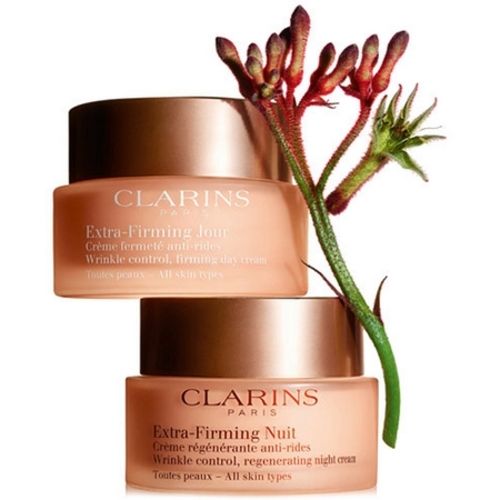
Clarins Extra-Firming: The Honest Adult Take on Firming Anti-Aging Cream
Clarins Extra-Firming has been the reference firming cream for adults over 35 for two decades. The honest assessment of what it does, what it doesn't, and where it fits in an adult routine.
Ferulic Acid for Adult Skin Over 40: The Underrated Antioxidant
Ferulic acid is the antioxidant that stabilizes vitamin C, extends UV protection, and gets ignored in mainstream skincare. The honest adult guide.