Peptides for Skin Over 40: What They Actually Do (And Don't)
Peptides are the most-marketed and least-understood category in adult skincare. Some genuinely help; most don't deliver the promised effects. Here's what they actually do.
Peptides have become the most-marketed and least-understood category in adult skincare. Every "anti-aging" serum lists peptides on the ingredient label. The marketing implies they're equivalent to retinoids or sunscreen in importance. The reality is more nuanced — some peptides have legitimate research support for specific effects, many products contain peptides at concentrations too low to be effective, and most of the dramatic anti-aging claims are oversold.
For adults over 40 trying to build an evidence-based skincare routine, the question isn't whether peptides are good or bad — it's where they actually fit, which ones do what, and what to spend on them versus the proven foundational ingredients (retinoid, sunscreen, barrier-supportive moisturizer). This guide is the practical version: what peptides are, which ones have research support, which products are worth the money, and how they integrate with the rest of an adult skincare routine.
The fast answer
Peptides are short chains of amino acids (2-50) that signal specific functions in skin — collagen production, inflammation reduction, muscle relaxation, barrier support. Some have meaningful research support: Matrixyl 3000 (palmitoyl-tripeptide-1) for collagen support, copper peptides (GHK-Cu) for wound healing and collagen, and Argireline (acetyl hexapeptide-8) for mild muscle-relaxant effect on expression lines. Most others have weak or no evidence beyond marketing claims. Peptides work best when they're a complement to a retinoid + sunscreen + moisturizer foundation, not a substitute. Products worth knowing: The Ordinary "Buffet" (multiple peptides at decent concentration, $20), Niod CAIS (premium copper peptides, $100+), Olay Regenerist Micro-Sculpting Cream (Matrixyl 3000 at mass-market price, $30). Don't pay $200+ for "peptide complex" products that don't disclose specific peptides or concentrations.
That's the structure. The texture is below.
What peptides actually are
Peptides are short chains of amino acids — the building blocks of proteins. Collagen, the structural protein in skin, is essentially a long chain of peptides folded into a specific shape. When peptides are applied to skin (either through products or in-office treatments), they can:
- Signal cells to produce more collagen or elastin — the most-cited claim
- Inhibit muscle contraction at the skin surface — reducing expression lines
- Support wound healing and skin barrier repair
- Modulate inflammation
- Carry other ingredients into the skin (carrier peptides)
The key question is whether topically-applied peptides actually do these things at the concentrations available in consumer products. The answer varies by peptide type.
The peptides with the best evidence
Matrixyl 3000 (palmitoyl-tripeptide-1 and palmitoyl-tetrapeptide-7)
The most-studied skincare peptide. Some research supports modest collagen-stimulating effects when used consistently over 8-12 weeks. Effect size is smaller than retinoids but with less irritation.
Best for: Fine lines, mild loss of firmness, adults who can't tolerate retinoids Products: Olay Regenerist Micro-Sculpting Cream ($30), The Ordinary "Buffet" ($20), Drunk Elephant Protini Polypeptide Cream ($68) Realistic effect: Modest improvement in fine lines and firmness after 12+ weeks of consistent use
Copper peptides (GHK-Cu)
The other peptide with substantial research support. Originally developed for wound healing; shown to stimulate collagen synthesis and skin barrier repair.
Best for: Loss of firmness, post-procedure recovery, barrier support, hair growth (in some scalp formulations) Products: Niod CAIS ($100), The Ordinary Buffet + Copper Peptides ($30), Skinceuticals CE Ferulic doesn't contain copper but is in this evidence-based tier Realistic effect: Mild firming and texture improvement; useful for post-procedure healing Note: Copper peptides can interact with vitamin C — apply at different times of day if using both
Argireline (acetyl hexapeptide-8)
Marketed as "topical Botox." Inhibits muscle contraction at the skin surface, reducing the appearance of expression lines.
Best for: Mild forehead and crow's-feet lines from expression Realistic effect: Much milder than actual Botox. Some adults notice a mild softening of dynamic lines with consistent use; many notice nothing significant. Products: The Ordinary "Argireline Solution 10%" ($9), Strivectin SD Advanced Plus ($79) Verdict: Worth trying as a low-cost supplement; don't expect Botox-level results
Beta-defensins and snake venom peptides (Syn-Ake)
Marketed for line-softening. Limited independent research; mostly manufacturer-funded studies. Verdict: Probably some effect; magnitude unclear; not a high-priority addition
Sh-oligopeptide-1 (EGF — Epidermal Growth Factor)
Stimulates cellular proliferation. Some research support for wound healing applications. Best for: Post-procedure recovery, mild firming Note: Concerns about whether EGF in routine skincare could potentially stimulate unwanted cell growth in vulnerable populations; consult a dermatologist if you have skin cancer history.
Peptides marketed without strong evidence
The vast majority of "peptide complex" products contain peptides at concentrations too low to be biologically active, or proprietary "peptide blends" that don't disclose actual amounts of any specific peptide. Common marketing terms that should trigger skepticism:
- "Multi-peptide complex" — usually means low concentrations of many peptides
- "Patented peptide technology" — often a marketing wrapper around standard ingredients
- "Bio-active peptides" — meaningless marketing phrase
- "Stem cell peptides" — typically growth factors from plant or other sources; effect unclear
- "Telomere-protecting peptides" — significant overpromise in current state of evidence
The way to evaluate: look for specific peptide names (Matrixyl 3000, GHK-Cu, palmitoyl tetrapeptide-7, etc.) at disclosed concentrations. Vague "peptide complex" labels usually mean low concentrations.
How peptides compare to retinoids
The honest comparison:
| Mechanism | Retinoid | Peptides |
|---|---|---|
| Collagen stimulation | Strong, well-documented | Modest, evidence-supported for specific peptides |
| Cell turnover | Strong, accelerates renewal | Minimal direct effect |
| Anti-acne | Effective | Not effective |
| Pigmentation | Effective | Minimal |
| Irritation | Moderate to high initially | Minimal |
| Time to results | 8-12 weeks | 8-12 weeks |
| Cost | $13-50 for adapalene or tretinoin | $20-100+ for quality peptide products |
| Research support | Extensive | Moderate for specific peptides; weak overall |
For adults building an evidence-based routine: prioritize retinoid first. Add peptides as a complement, not a replacement. The combination — retinoid at night, peptide-supporting moisturizer or serum in the morning — works better than either alone for adults who tolerate both.
For the retinoid foundation, see retinol for beginners after 40.
How to use peptides effectively
Application timing
Peptides are generally well-tolerated and can be used:
- In the morning after cleanser, before moisturizer and sunscreen
- In the evening after cleanser, often paired with or alternating with a retinoid
For most adults: morning application is the simpler integration. Apply a peptide serum after cleansing, follow with moisturizer and sunscreen.
Layering with other ingredients
Works well with:
- Niacinamide
- Hyaluronic acid
- Ceramides
- Sunscreen
- Moisturizer
Use cautiously with:
- Vitamin C (potential pH conflict with copper peptides specifically — apply at different times of day)
- Retinoid (apply at different times — morning peptide, evening retinoid)
- Strong exfoliants (AHA/BHA at high concentration — can degrade peptides)
Realistic expectations
Peptides work slowly. Consistent use for 8-12 weeks before evaluating results. The effect is gradual improvement in fine lines, firmness, and texture — not dramatic transformation.
If you notice no difference after 12 weeks of consistent use, the product probably isn't doing meaningful work for your skin. Don't stack multiple peptide products expecting amplified results; pick one well-formulated product and commit.
Products worth knowing
Budget ($15-30)
- The Ordinary "Buffet" ($20) — Matrixyl 3000 + copper peptides + EGF at meaningful concentrations. The benchmark budget peptide serum.
- The Ordinary Argireline Solution 10% ($9) — pure Argireline for expression line softening
- Olay Regenerist Micro-Sculpting Cream ($30) — Matrixyl 3000 + niacinamide in a moisturizing base
- Cerave Skin Renewing Peptide Serum ($20) — collagen peptides + niacinamide
Mid ($30-80)
- Drunk Elephant Protini Polypeptide Cream ($68) — multiple peptides in a moisturizer
- Paula's Choice Peptide Booster ($45) — concentrated peptide complex
- Strivectin SD Advanced Plus ($79) — Argireline + Matrixyl combination
Premium ($80+)
- Niod CAIS (Copper Amino Isolate Serum) ($100) — premium copper peptide formulation
- Skinceuticals Discoloration Defense ($110) — for pigmentation, includes peptides
- Augustinus Bader The Cream ($280) — proprietary peptide complex; well-loved but expensive
- The Estée Lauder Advanced Night Repair ($85) — peptides + multiple actives, refined formula
Skip
- Anything that lists "peptide complex" or "bio-active peptides" without specific names and concentrations
- "Stem cell peptide" products at premium prices — limited evidence for the dramatic claims
- Peptides in basic moisturizer marketed as "anti-aging miracle" — usually low concentrations
- Subscription "peptide treatments" sold via direct-to-consumer marketing without clinical research
How peptides fit with the rest of skincare
Peptides are mid-tier in the skincare hierarchy — useful but not foundational. The order of priority for adults over 40:
- Sunscreen daily — see sunscreen after 40: the non-negotiable
- Gentle barrier-supportive routine — see skin barrier repair after 40 and simple skincare routine after 40
- Retinoid for cell turnover and collagen — see retinol for beginners after 40
- Niacinamide for inflammation and brightening — see niacinamide for skin over 40
- Hyaluronic acid for hydration — see hyaluronic acid for skin over 40
- Peptides as complementary support
- Vitamin C for antioxidant protection
- In-office procedures for specific issues — see cosmetic procedures after 40
Adults who add peptides without addressing the top 5 are putting effort into a mid-priority area while missing the high-priority ones. Build the foundation first; peptides amplify but don't substitute.
Common mistakes
Believing peptides replace retinoids. They don't. Peptides have a complementary role; retinoids are the proven foundation for anti-aging.
Stacking multiple peptide products. Doesn't multiply the effect. Pick one well-formulated product and commit.
Buying based on "peptide complex" claims without specific names. Vague labeling usually means low concentrations or proprietary blends that don't disclose actual amounts.
Expecting dramatic results. Peptides work modestly and slowly. They're not Botox in a bottle.
Paying premium prices for marginal additional benefit. A $20 The Ordinary Buffet does most of what a $200 designer peptide serum does. Spend the savings on retinoid or sunscreen.
Using peptides without sunscreen. UV damage progressively undoes any peptide-driven gains. Sunscreen first; peptides amplify.
Layering peptides with strong AHA/BHA at the same time. Acid environment can degrade peptides. Use at different times of day or alternate days.
Skipping peptides because "they don't work." Mixed evidence is real; some peptides do have meaningful effects. Don't write off the entire category — just be selective about which products.
Adding peptides while ignoring lifestyle factors. Chronic stress, poor sleep, sun exposure all undermine peptide-driven gains. The system matters.
Mixing copper peptides with vitamin C. Potential pH/oxidation interactions. Use at different times of day (vitamin C AM, copper peptides PM, or vice versa).
Realistic timeline for peptide results
Week-by-week expectations with consistent use of a quality peptide product:
- Weeks 1-4: Minimal visible change. Skin may feel slightly more hydrated or smooth from the formulation, but this is from the supporting ingredients (humectants, emollients), not the peptides themselves.
- Weeks 4-8: Subtle improvements in skin texture and possibly mild firmness. Hard to attribute specifically to peptides vs. other routine improvements.
- Weeks 8-12: If the peptide is working, this is when small but real changes in fine lines and firmness become visible. Effect is modest but real.
- Beyond 12 weeks: Continued slow improvement. Most peptide effects plateau by 6 months of consistent use.
If you've used a peptide product consistently for 12 weeks and notice no difference, the product probably isn't delivering meaningful effect. Switch to a different formulation or accept that peptides may not be the right addition for your routine.
How peptides relate to broader anti-aging strategy
The strongest anti-aging interventions for adults over 40, in rough order:
- Daily sunscreen — by far the most evidence-based
- Quitting smoking if applicable
- Adequate sleep — see why sleep affects how you smell for the broader sleep-skin connection
- Topical retinoid
- Stress management — see how stress affects skin and smell
- Antioxidant protection (vitamin C, niacinamide)
- In-office procedures for specific issues — see cosmetic procedures after 40
- Peptides as supportive
- Hyaluronic acid and similar hydration support
- Hormonal interventions in specific cases (estrogen, etc.)
Most of the high-impact interventions are lifestyle and foundational skincare. Peptides are part of the toolkit but not the centerpiece. Adults focused on the basics with peptides as supplement will outperform adults using premium peptide products on top of poor foundation.
FAQ
Do peptides actually work? Some do, modestly, when formulated properly and used consistently. Matrixyl 3000, copper peptides, and Argireline have the best evidence. Many "peptide complex" products have weak evidence and oversold claims.
Are peptides better than retinoids? No. Retinoids have stronger evidence for collagen stimulation, cell turnover, and visible anti-aging effects. Peptides are complementary, not replacement.
Can I use peptides instead of retinoids if I can't tolerate retinoids? Yes, as a substitute for adults who genuinely can't use retinoids due to sensitivity. Expect modestly less anti-aging effect than retinoid-tolerant adults achieve, but real benefit nonetheless.
Are expensive peptide products worth it? Usually not above the $30-50 range. The Ordinary's $20 Buffet contains effective peptides at meaningful concentrations. Premium products often include refined formulations and pleasant textures but don't deliver dramatically better results.
How long until I see results from peptides? 8-12 weeks of consistent use minimum. If you see nothing after 12 weeks, the product likely isn't working. Don't expect overnight or even monthly transformations.
Can I use multiple peptide products? Layering multiple peptide products doesn't amplify results meaningfully. Pick one well-formulated product (or one quality moisturizer + one quality serum) and commit.
Are copper peptides safe? Yes for most adults; well-tolerated and have good safety record. Mild risk of staining clothing or pillowcases with the copper. Avoid mixing with vitamin C at the same time.
Should I use peptides if I'm under 30? You don't need to. The foundational routine (sunscreen, gentle cleanser, moisturizer, eventual retinoid) is enough through your 20s and early 30s. Peptides become more useful as collagen decline begins more meaningfully in late 30s and beyond.
Related guides: simple skincare routine after 40, retinol for beginners after 40, niacinamide for skin over 40, hyaluronic acid for skin over 40, cosmetic procedures after 40: what's worth it.

How to Prepare Your Skin Before Summer: The Adult Pre-Sun Protocol After 40
Adults who treat summer skin protection as a day-of project lose ground every year. The honest pre-summer protocol that pays back for months of consistent outdoor exposure.
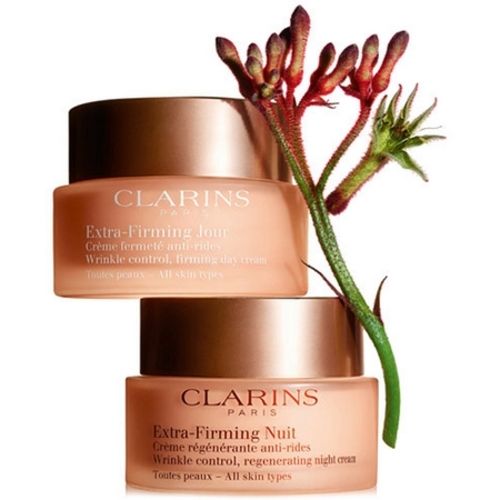
Clarins Extra-Firming: The Honest Adult Take on Firming Anti-Aging Cream
Clarins Extra-Firming has been the reference firming cream for adults over 35 for two decades. The honest assessment of what it does, what it doesn't, and where it fits in an adult routine.

Ferulic Acid for Adult Skin Over 40: The Underrated Antioxidant
Ferulic acid is the antioxidant that stabilizes vitamin C, extends UV protection, and gets ignored in mainstream skincare. The honest adult guide.