Hyaluronic Acid for Skin Over 40: Hydration That Actually Works
Hyaluronic acid is in everything. Used wrong it dehydrates your skin instead of hydrating it. Here's the science and the routine that actually works after 40.
Hyaluronic acid is the most-marketed ingredient in skincare and the most misunderstood. Adults over 40 reach for it because the marketing promises "plumper, more hydrated skin." Then half of them apply it in dry air, in a dry climate, or without a moisturizer on top — and the result is skin that feels worse, not better. The HA in the serum is pulling moisture from the deeper layers of the skin and evaporating it into the dry environment, leaving you more dehydrated than you started.
This is the central irony of HA: it can hydrate your skin or dehydrate it, depending entirely on what's around it. Used in a routine that gives it water to grab and seals it in, HA is one of the most useful ingredients in adult skincare. Used wrong, it's actively counterproductive.
This guide is the practical version: how HA works, when to apply it, what to layer over it, what to avoid, and which products are worth your money.
The fast answer
Hyaluronic acid is a humectant — it pulls water from wherever water is available and holds it. To work for you instead of against you: apply HA serum to damp (not dry) skin, immediately after cleansing, and seal it with a moisturizer within 60 seconds. In dry climates or dry seasons, use a humidifier or skip HA serums entirely in favor of richer occlusive moisturizers. Most adults over 40 don't need a dedicated HA serum at all if their moisturizer already contains hyaluronic acid or glycerin; CeraVe and La Roche-Posay moisturizers do. Cheaper and simpler than buying a separate $40 HA bottle. The Ordinary Hyaluronic Acid 2% + B5 ($9) and La Roche-Posay Hyalu B5 Serum ($45) are the workhorse products in the category.
That's the structure. The texture is below.
What hyaluronic acid actually is
Hyaluronic acid (HA) is a glycosaminoglycan — a long-chain sugar molecule — that occurs naturally in human skin, joints, and connective tissue. In the dermis, HA helps maintain volume, elasticity, and water content. Skin's natural HA levels drop with age, which is one of the factors behind thinner, less plump-looking skin after 40.
Topical HA in skincare products is structurally similar to natural HA but applied to the surface, where it can't reach the dermis directly (the molecules are too large to penetrate that deep). What it can do is:
- Sit in the upper stratum corneum and hold water there
- Slow transepidermal water loss when used under occlusive products
- Improve immediate surface plumpness (the famous "instant hydration")
- Support barrier function indirectly by maintaining surface moisture
What it can't do, despite marketing claims:
- Build collagen
- Penetrate to the deeper dermis where natural HA matters
- Replace your body's own HA production
- Anti-age in the way retinoids or sunscreen do
It's a hydration tool, not a treatment. Used correctly it makes skin look and feel better immediately and supports the barrier. Used incorrectly it actively dehydrates.
The humectant problem — why HA can dehydrate
A humectant is any molecule that attracts and holds water. HA, glycerin, urea, and propylene glycol are all humectants. They all work the same way: they grab water from whatever environment has the most water available.
In a humid environment (high ambient humidity, water in the air), humectants pull water from the air into your skin. Great.
In a dry environment (low ambient humidity, dry indoor heat, winter air), humectants pull water from the deeper layers of your skin upward — and if there's nothing sealing the surface, that water evaporates. Net effect: drier skin than you started.
This is the central use-case error with HA serums. Adults apply them in winter, in heated indoor environments, on dry skin, with no moisturizer layered over, and wonder why their skin feels tight and rough.
The fix is simple: apply HA to damp skin (so the HA has water at the surface to grab), apply moisturizer over it within 60 seconds (so the water doesn't evaporate), and use a humidifier if your indoor humidity is consistently below 40%.
How to actually use HA
Step by step:
- Cleanse with a gentle cleanser — see skin barrier repair after 40 for the cleanser logic. Pat skin lightly with a towel; leave it slightly damp.
- Apply HA serum within 30 seconds of finishing cleansing. The skin should still be visibly damp. Use 3-5 drops; press into the face with palms rather than rubbing.
- Wait 30-60 seconds for the serum to set, but don't let the skin dry out fully.
- Apply moisturizer on top while the skin is still slightly damp. The moisturizer seals in the water that the HA grabbed.
- In the morning, apply sunscreen on top of the moisturizer.
That's it. The HA is doing two jobs: holding water at the surface immediately, and being sealed under the moisturizer to extend that hydration over hours.
Apply HA twice a day (AM and PM) if you have dry or mature skin. Once a day (typically AM) is fine for combination or oily skin. Skip entirely on days when skin feels well-hydrated and add it back when needed — there's no penalty to inconsistent use.
Different HA molecular weights — and why it matters less than you think
Marketing makes a big deal of "low molecular weight" vs "high molecular weight" HA. The basic idea: smaller molecules can penetrate deeper into the upper layers of skin and hydrate slightly more deeply; larger molecules sit at the surface and provide immediate surface plumpness.
Most quality HA serums now use a multi-weight blend (small + medium + large) to cover multiple layers. The Ordinary's HA 2% + B5 uses this approach; so does La Roche-Posay Hyalu B5 and most mid-tier products.
The practical takeaway: don't pay a premium for "low molecular weight HA" branding alone. A multi-weight serum at $9 (The Ordinary) does most of what a $80 serum claims. The B5 (panthenol) in both products is the more meaningful add — it's soothing, mildly barrier-supportive, and amplifies the hydration effect.
Products worth knowing
The category has more good cheap options than premium ones.
Budget ($5-15):
- The Ordinary Hyaluronic Acid 2% + B5 — $9. The default. Multi-weight HA, B5, lightweight texture. Works for almost everyone.
- The Inkey List Hyaluronic Acid Serum — $9. Similar formula, slightly thicker.
Mid ($25-50):
- La Roche-Posay Hyalu B5 Serum — $45. Pharmacy-grade, well-formulated, multi-weight HA + B5. The step up from The Ordinary if you want a more refined texture and longer track record.
- Vichy Mineral 89 — $35. HA + thermal water + minerals, slightly different mechanism, very gentle.
Premium ($60+):
- SkinCeuticals Hydrating B5 — $90. Excellent formula, expensive for what it is, brand prestige.
- Niod Multi-Molecular Hyaluronic Complex — $50. Genuinely innovative formula with 15 different molecular weights. Worth the price if you're into skincare optimization.
For most adults: The Ordinary HA + B5 or La Roche-Posay Hyalu B5 covers it. The $90 SkinCeuticals doesn't do meaningfully more.
Skip:
- "Sheet masks soaked in HA" — useful for an immediate event, useless as a daily routine
- HA-infused water sprays — minimal effect, mostly marketing
- HA-only products with no other actives ("pure hyaluronic acid powder") — the application complexity isn't worth it
When you don't need a dedicated HA serum
Most quality moisturizers already contain HA, glycerin, and other humectants. If your moisturizer is doing this work, you don't need a separate serum step.
Moisturizers that contain meaningful HA:
- CeraVe Daily Moisturizing Lotion (HA + ceramides + glycerin)
- La Roche-Posay Toleriane Double Repair (HA + ceramides + niacinamide)
- Neutrogena Hydro Boost Gel (HA + glycerin, lightweight)
- Vanicream Moisturizing Cream (humectants + occlusives)
If you use one of these and your skin feels hydrated, you can skip the dedicated HA serum step. Simpler is often better — see simple skincare routine after 40.
The case for the dedicated serum: you want maximum hydration, you have visible dehydration lines, you're in a humid climate where humectants work optimally, or you specifically want a lightweight step under a heavier moisturizer.
Pairing HA with other actives
HA plays well with everything because it's mostly inert beyond its hydration function. Specific pairings:
- HA + retinoid: Excellent. HA can buffer retinoid irritation. Apply HA, wait, then retinoid, then moisturizer. See retinol for beginners after 40 for the broader retinoid routine.
- HA + vitamin C: Fine. Apply vitamin C first (it's pH-sensitive), then HA. Or use a HA+VitC combined product like Murad Vita-C Eyes Dark Circle Corrector.
- HA + niacinamide: Excellent. Both water-based, both layer easily. Apply in either order. See niacinamide for skin over 40.
- HA + AHA/BHA: Fine. HA can soothe post-exfoliation skin. Apply HA after the exfoliant has done its work and been removed.
- HA + benzoyl peroxide: Fine, but pointless to layer on the same areas. Use HA elsewhere and BP on acne spots.
- HA + sunscreen: Standard. HA under sunscreen is the morning default.
The only real "don't" is HA without water access. Always apply to damp skin, always seal with a moisturizer.
Common mistakes
Applying HA to dry skin. The number one cause of HA-induced dryness. There must be surface moisture for the humectant to grab. Apply within 30 seconds of cleansing while skin is still damp.
Skipping the moisturizer over HA. HA holds water; moisturizer locks it in. Without the moisturizer, the water evaporates within minutes and you've made your skin drier.
Using HA in dry indoor heat without humidification. Winter heating, desert climates, airplane cabins — all bad for humectants. Either use a humidifier (target 40-50% indoor humidity) or skip HA in favor of richer barrier creams during dry periods.
Layering five HA products in one routine. HA-infused cleanser + HA serum + HA moisturizer + HA mask isn't more hydration; it's marketing duplication. One source of HA in your routine is enough.
Buying expensive HA expecting transformational results. HA is hydration, not anti-aging. It makes skin look immediately better; it doesn't change skin structure over time the way retinoids do. Don't expect a $90 serum to outperform a $9 one on visible aging.
Ignoring environmental humidity. Your skin's hydration is partly determined by what's in the air around it. A humidifier is the single most useful "skincare product" most adults could add in winter.
Treating HA as a substitute for water intake or sleep. Topical hydration is a small contributor to overall skin hydration. Internal hydration (water) and recovery (sleep) matter more. See hydration and how it affects skin and smell and why sleep affects how you smell for the bigger system.
Skipping HA because "I have oily skin and don't need hydration." Oily skin can still be dehydrated. The two are different (oil vs water content). Dehydrated oily skin produces more oil to compensate. HA under a lightweight gel moisturizer is fine for oily skin.
Using HA serum without testing for sensitivity. Some adults react to the polysaccharide structure or to the preservatives in HA serums. Patch-test on the inner arm for 3 days before applying to the face.
A realistic routine that includes HA
Morning:
- Splash face with cool water (don't always need cleanser)
- Apply HA serum (3-4 drops) to damp skin
- Vitamin C serum (optional, after HA fully absorbs)
- Moisturizer (lightweight in summer, richer in winter)
- Sunscreen SPF 30+
Evening:
- Gentle cleanser, pat dry leaving damp
- Apply HA serum to damp skin
- Retinoid (if you use one) — adapalene or tretinoin, wait 10-20 min
- Moisturizer (richer at night)
Total products: 5-6. Total time: 5 minutes morning, 5 minutes evening. The HA is a small step in a larger routine, not the focal point.
How HA fits with the rest of skincare
HA hydrates the surface. The barrier holds it in. Retinoids modify cell turnover beneath. Sunscreen prevents damage above. Niacinamide modulates inflammation and oil. Vitamin C addresses pigmentation. Each ingredient does one job; HA's job is water retention, and it does it well within its limitations.
The skincare hierarchy for adults over 40 (in rough importance order):
- Sunscreen — covered in sunscreen after 40: the non-negotiable
- Barrier care — covered in skin barrier repair after 40
- Retinoid for cell turnover and anti-aging — covered in retinol for beginners after 40
- Moisturizer with ceramides
- Niacinamide or other targeted active
- Hyaluronic acid for hydration support
- Vitamin C for pigmentation
HA isn't at the top of the list because it's not what changes skin structure. It's a comfort and surface-appearance tool. Important but not the lever to pull first if you're prioritizing.
FAQ
Will HA make my skin look plumper immediately? Yes, somewhat — the surface plumpness from water retention is visible within 5-15 minutes. The effect is real but temporary; it depends on continued hydration and sealing.
Can HA cause breakouts? Rarely. Some adults react to the formula (preservatives, fragrance) rather than the HA itself. Patch-test new HA products if you have reactive skin.
Should I use HA in summer or winter? Both, but with adjustments. Summer: works easily because of higher ambient humidity. Winter: must be paired with a humidifier and richer moisturizer or it will dehydrate. Some adults skip dedicated HA serums in winter and use only HA-containing moisturizers.
Does HA help with wrinkles? Surface dehydration lines, yes — they smooth out with proper hydration. Structural wrinkles (collagen-based), no. Retinoids and sunscreen address those.
Can I use HA on the body too? Yes, especially for dry skin patches, but body skin generally responds better to richer creams with ceramides than to humectant serums. Save the HA for the face.
Is hyaluronic acid the same as sodium hyaluronate? Yes — sodium hyaluronate is the salt form of hyaluronic acid, more stable and equally effective. Most "HA" in skincare is actually sodium hyaluronate.
What's the difference between HA, glycerin, and other humectants? All do similar work. HA has the marketing advantage and slightly better surface texture. Glycerin is cheaper, works similarly, and is in nearly every moisturizer. Many products combine both. Function-wise, you don't need both as dedicated products.
Can I make my own HA serum? DIY HA serums from raw powder are workable but tricky — pH stability, preservation, and contamination are all real issues. Buy a formulated product unless you're an experienced DIY formulator.
Related guides: simple skincare routine after 40, skin barrier repair after 40, retinol for beginners after 40, niacinamide for skin over 40, sunscreen after 40: the non-negotiable.

How to Prepare Your Skin Before Summer: The Adult Pre-Sun Protocol After 40
Adults who treat summer skin protection as a day-of project lose ground every year. The honest pre-summer protocol that pays back for months of consistent outdoor exposure.
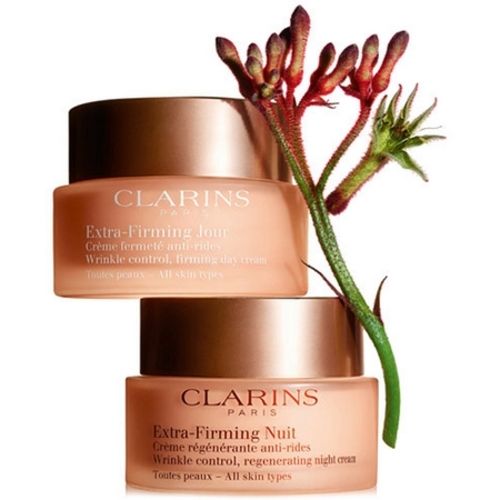
Clarins Extra-Firming: The Honest Adult Take on Firming Anti-Aging Cream
Clarins Extra-Firming has been the reference firming cream for adults over 35 for two decades. The honest assessment of what it does, what it doesn't, and where it fits in an adult routine.

Ferulic Acid for Adult Skin Over 40: The Underrated Antioxidant
Ferulic acid is the antioxidant that stabilizes vitamin C, extends UV protection, and gets ignored in mainstream skincare. The honest adult guide.