Adult Acne After 40: Why It Comes Back and What Actually Clears It
Adult acne after 40 isn't the same as teenage acne. It's deeper, slower to clear, and triggered by hormones and stress more than oil. Here's the routine that actually works without damaging older skin.
Adult acne after 40 is one of the most demoralizing skin problems because it's not supposed to be happening. You did your time in high school. The breakouts stopped at 22. And now, in your 40s or 50s, you're getting deep, painful, slow-healing pimples along the jawline, on the chin, around the mouth — and the products you used at 19 are making it worse, not better.
The reason is that adult acne isn't the same disease as teenage acne. The mechanisms are different, the treatments are different, and the routines that work in your 40s would have failed at 16. If you're approaching adult breakouts with benzoyl peroxide and aggressive scrubbing because that's what worked decades ago, you're treating the wrong problem and damaging the skin barrier you'll need for the next forty years.
The fast answer
Adult acne after 40 is mostly hormonal and inflammatory rather than oil-and-bacteria-driven like teenage acne. The treatment stack that works: gentle non-stripping cleanser, a topical retinoid (adapalene 0.1% over-the-counter, or prescription tretinoin), a niacinamide serum, sunscreen daily, and either azelaic acid 10-20% or a low-dose spironolactone prescription for hormonal jawline acne in women. Skip benzoyl peroxide as a first-line treatment — it's drying and disrupts the barrier without addressing the actual cause. See a dermatologist if you're getting cystic acne; topical treatments often aren't enough.
That's the structure. The texture below is what to use when, what to drop, and how to layer this into the rest of your skincare routine after 40 without wrecking the barrier.
Why adult acne after 40 is a different problem
Teenage acne is primarily driven by excess sebum production triggered by puberty hormones, combined with rapid skin cell turnover that clogs follicles, plus the bacterium C. acnes (formerly P. acnes) feeding on that sebum. Treat any of those three pillars — strip the oil, exfoliate the cell buildup, kill the bacteria — and most teenage acne improves.
Adult acne after 40 looks similar on the surface but the underlying biology has shifted:
- Sebum production has dropped. Your skin is drier than it was at 18. Stripping oil aggressively now causes barrier damage, which itself triggers more inflammation and more breakouts. The "wash your face four times a day" approach actively makes it worse.
- Cell turnover has slowed. This is the same reason fine lines accumulate — dead cells linger longer. They still clog follicles, but the problem is sluggishness rather than overproduction.
- Hormonal fluctuation is the dominant trigger. Perimenopause in women (typically 40s-50s) causes monthly androgen spikes that drive jawline and chin acne. Men in their 40s often see stress-related cortisol patterns trigger breakouts after years of clear skin.
- Inflammation runs hotter and clears slower. A pimple that lasted three days at 19 now takes two weeks to resolve and often leaves a dark spot or scar.
This is why adult acne is frustrating: same-looking problem, different mechanism, completely different treatment plan.
The treatment stack that works
| Product | Role | Frequency |
|---|---|---|
| Gentle non-foaming cleanser | Remove oil/sunscreen without stripping | AM + PM |
| Adapalene 0.1% (or tretinoin) | Normalize cell turnover, unclog follicles | PM, every night or every other night |
| Niacinamide 5-10% serum | Calm inflammation, reduce sebum, fade marks | AM (or both) |
| Azelaic acid 10-20% | Anti-inflammatory + brightening + mild antibacterial | AM or alternated with retinoid PM |
| Lightweight moisturizer (ceramide-based) | Repair barrier | AM + PM |
| Sunscreen SPF 30+ | Prevent post-inflammatory hyperpigmentation | AM, every day |
| Spironolactone (Rx, women) | Block androgens that drive jawline breakouts | Daily by prescription |
That's the entire ecosystem. Everything else is either redundant or actively harmful.
Step 1: Cleanse without stripping
A foaming, sulfate-heavy cleanser feels satisfying because it squeaks. The squeak is the sound of your barrier being damaged. Over 40, the barrier doesn't bounce back the way it used to.
Use a gentle, low-foam cleanser. CeraVe Hydrating Cleanser, La Roche-Posay Toleriane Hydrating, or Vanicream Gentle Facial Cleanser are all fine. Don't bother with "acne wash" cleansers — the active ingredient (usually salicylic acid or benzoyl peroxide) is rinsed off in 30 seconds and doesn't do meaningful work on adult acne. Save the actives for leave-on products.
Cleanse twice a day. Morning to remove overnight oils and product residue, evening to remove sunscreen, sweat, and pollution. Don't cleanse more often — over-washing is one of the top causes of adult acne not clearing.
Step 2: Retinoid is the single most important product
If you read nothing else, read this: a topical retinoid does more work on adult acne than any other category of product. It normalizes the disordered cell turnover that's clogging follicles, reduces inflammation at the dermal level, and as a bonus is the most evidence-backed anti-aging ingredient available. It does both jobs at once.
For most adults, start with adapalene 0.1% — sold over the counter as Differin Gel. It's the gentlest retinoid that works, was prescription-only for years, and is now $13 at any drugstore. Apply a pea-sized amount to dry skin every night, or every other night for the first two weeks while your skin adapts.
If adapalene plateaus after three to six months, talk to a dermatologist about prescription tretinoin 0.025% or 0.05%. It's stronger and clears acne more aggressively, with more initial irritation.
If you're already on a retinoid for anti-aging purposes — see the retinol-for-beginners-after-40 guide — you don't need a separate acne retinoid. The same product does both jobs.
Step 3: Niacinamide for the inflammation
Niacinamide is the multi-tasker. At 5-10% concentration applied morning or twice daily it:
- Reduces inflammation (which is why adult acne is so red and slow-healing)
- Reduces sebum output mildly
- Strengthens the skin barrier
- Fades the dark spots that adult acne leaves behind
The Ordinary Niacinamide 10% + Zinc 1% is $7 and works as well as the $80 versions. Paula's Choice 10% Niacinamide Booster is the slightly more refined option. Apply after cleansing, before moisturizer. See niacinamide for skin over 40 for the full breakdown of what it actually does.
Step 4: Azelaic acid — the underrated anti-inflammatory
Azelaic acid is the most underrated ingredient for adult acne. It's anti-inflammatory, mildly antibacterial, fades post-acne marks, and is gentle enough to use long-term. 10% over-the-counter (The Ordinary Azelaic Acid 10% Suspension) or 15-20% prescription (Finacea or generic) both work.
Use it in the morning, after niacinamide, before sunscreen. Or alternate it with your retinoid at night if morning routines are too crowded. It pairs well with everything and irritates almost nothing.
For women with rosacea-adjacent adult acne — flushing plus pimples — azelaic acid is often more effective than any antibacterial approach.
Step 5: Moisturizer that repairs the barrier
Adult acne plus aggressive treatment plus a stripped barrier is the classic recipe for skin that gets worse every week. A ceramide-based moisturizer rebuilds the barrier and lets the actives work without triggering inflammation.
CeraVe Moisturizing Cream (PM) or CeraVe Daily Moisturizing Lotion (AM) cover this for under $20. La Roche-Posay Toleriane Double Repair is the slightly nicer option. Apply after serums, before sunscreen in the morning.
"My skin is oily, I don't need moisturizer" is wrong over 40 even if you have breakouts. The skin is producing excess oil partly because it's dehydrated and the barrier is signaling for more oil. Moisturizing reduces, not increases, breakouts in adult acne.
Step 6: Sunscreen, daily, non-negotiable
Adult acne leaves dark spots — post-inflammatory hyperpigmentation — that take 6-12 months to fade. UV exposure makes those spots permanent. A daily mineral or chemical sunscreen at SPF 30+ is non-negotiable. La Roche-Posay Anthelios Mineral, EltaMD UV Clear (designed for acne-prone skin), or Black Girl Sunscreen for darker skin tones are the go-to non-greasy options.
The full case for sunscreen as the single highest-ROI product in any over-40 routine is in sunscreen after 40: the non-negotiable. Skipping it while treating acne guarantees worse dark spots than the acne itself.
Step 7 (women, hormonal jawline acne): Spironolactone
If your acne is concentrated along the jawline and chin, worsens with your menstrual cycle, and topical treatments aren't enough, ask a dermatologist about spironolactone. It's an oral medication that blocks androgens — the hormones driving the breakouts — and is the closest thing to a cure for hormonal adult acne in women.
Typical doses are 50-100mg daily. It takes 3-6 months to see full effect. Side effects are mild for most women (increased urination, occasional dizziness initially) and it has a long safety track record. Not appropriate during pregnancy.
This isn't something to self-prescribe. It's a conversation with a dermatologist after topical treatments have plateaued.
Common mistakes
Benzoyl peroxide as a first-line treatment. It's drying, irritates aging skin barriers, bleaches towels and pillowcases, and doesn't address the hormonal/inflammatory drivers of adult acne. It's still useful as a spot treatment for occasional inflammatory pimples, but as a daily wash it does more harm than good after 40.
Over-exfoliation. A scrub, a chemical exfoliant, and a retinoid is too much. Pick one chemical exfoliant (the retinoid, if you have one) and skip physical scrubs entirely. Microtearing the skin barrier creates more breakouts, not fewer.
Switching products every two weeks. Skincare actives take 8-12 weeks to show real results. If you switch your routine every time a breakout happens, you'll never give anything long enough to work. Pick a stack and commit for three months.
Treating dry, flaky skin from a retinoid as more acne. Retinoid irritation looks like little bumps and feels like rough skin. The instinct is to exfoliate harder. Wrong move — buffer with more moisturizer and reduce retinoid frequency until skin adapts.
Skipping sunscreen. Dark spots from healed acne can outlast the acne itself by years if you're not protecting them. Sunscreen daily is what makes the difference between "had acne, recovered cleanly" and "skin looks blotchy for the next decade."
Stress and sleep as side issues. They're not side issues. Cortisol drives adult acne directly. The relationship between stress, skin, and smell and the way sleep affects skin and odor is direct, measurable, and worth treating as primary inputs rather than lifestyle advice.
Picking, popping, squeezing. Adult skin scars more than teenage skin. The pimple that you pop today is a brown spot for six months and possibly a permanent texture change. Hands off the face.
What it looks like in practice
A realistic AM routine:
- CeraVe Hydrating Cleanser (or just water on light-shedding days)
- Niacinamide 10% serum
- Azelaic acid 10% (optional, can move to PM)
- Lightweight moisturizer
- Sunscreen SPF 30+
A realistic PM routine:
- CeraVe Hydrating Cleanser
- Adapalene 0.1% (or tretinoin), pea-sized, all over face
- Wait 10-20 minutes
- CeraVe Moisturizing Cream
That's eight products total, all available at any drugstore, total cost around $100 for several months of supply.
How long until it works
Realistic timeline:
- Weeks 1-4: Sometimes worse before better. Retinoids purge clogged follicles in the first month, so existing comedones surface as visible pimples. This is normal and not a reason to stop.
- Weeks 4-8: Inflammation starts dropping. Fewer new breakouts. Dark spots from previous breakouts begin to fade.
- Weeks 8-12: Substantial clearing for most people on this stack. Skin texture also improves as a side effect — retinoids work on fine lines while clearing acne.
- Months 3-6: Stable clear skin for most. If you're still breaking out consistently after six months on this routine, see a dermatologist for prescription escalation.
This is slow compared to teenage acne. Adult skin works slowly. Patience is part of the treatment.
When to see a dermatologist
Don't self-treat indefinitely if:
- You're getting cystic acne (deep, painful, no head)
- Breakouts are concentrated in one area and not responding after 3 months
- You're scarring (texture changes, not just dark spots)
- You're a woman with classic hormonal jawline acne who hasn't tried spironolactone
- You have rosacea-adjacent symptoms (flushing, visible vessels)
Prescription tretinoin, oral antibiotics, spironolactone, and isotretinoin (Accutane) for severe cases are all options the over-the-counter stack can't replicate. A dermatologist visit is $200-400 out of pocket and can save you a year of trial and error.
FAQ
Why am I getting acne in my 40s when I never had it as a teenager? Hormonal fluctuation and increased cortisol from adult stress are the most common drivers. Perimenopause in women, chronic stress in both genders, and changes in skin barrier function all contribute. It's biologically distinct from teenage acne and the treatment plan is different.
Should I use benzoyl peroxide? Not as a daily wash. It's drying for adult skin barriers and doesn't target the hormonal/inflammatory drivers of adult acne. Reserve it as an occasional spot treatment for inflamed pimples; use a retinoid + niacinamide + azelaic acid stack as the daily foundation.
Is adapalene as good as prescription tretinoin? For mild to moderate adult acne, yes — and it's gentler, which matters more after 40. For severe or stubborn acne, tretinoin is stronger and worth the prescription visit. Don't use both at the same time.
Can I do retinol for anti-aging and adapalene for acne at the same time? No. Both are retinoids and stack the irritation. Use one product (adapalene or tretinoin) that does both jobs. It's a feature, not a redundancy.
Why is azelaic acid better than salicylic acid for adult acne? Salicylic acid is better for oily, congested teenage skin. Azelaic acid is anti-inflammatory and barrier-friendly, which matches adult acne's profile. Salicylic acid is fine occasionally, but azelaic acid does more for the average over-40 face.
How long do I have to keep doing this? Indefinitely for most people. Adult acne is a chronic condition, not an event. The good news is the routine that clears it is also the routine that addresses lines, dullness, and pigmentation — see anti-aging skincare in your 30s for how this overlaps with the standard adult routine.
Will diet help? Some. High-glycemic diets and skim dairy have modest evidence as acne triggers. Whole-food diets help for some adults. It's worth experimenting with a 4-6 week elimination of dairy or refined sugar if topical treatments aren't enough — see how diet affects body odor and skin for the broader picture. Don't expect dramatic results from diet alone.
Do I still need to wear sunscreen with acne? Yes, more than ever. UV makes post-inflammatory hyperpigmentation permanent. Pick a non-comedogenic sunscreen designed for acne-prone skin (EltaMD UV Clear is the gold standard) and wear it daily.
Related guides: simple skincare routine after 40, retinol for beginners after 40, niacinamide for skin over 40, sunscreen after 40, how to fade hyperpigmentation.

How to Prepare Your Skin Before Summer: The Adult Pre-Sun Protocol After 40
Adults who treat summer skin protection as a day-of project lose ground every year. The honest pre-summer protocol that pays back for months of consistent outdoor exposure.
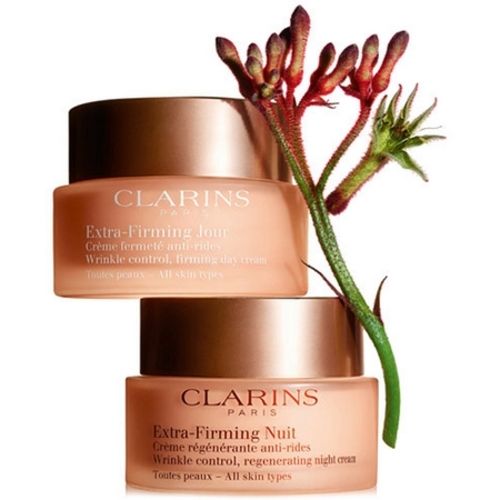
Clarins Extra-Firming: The Honest Adult Take on Firming Anti-Aging Cream
Clarins Extra-Firming has been the reference firming cream for adults over 35 for two decades. The honest assessment of what it does, what it doesn't, and where it fits in an adult routine.

Ferulic Acid for Adult Skin Over 40: The Underrated Antioxidant
Ferulic acid is the antioxidant that stabilizes vitamin C, extends UV protection, and gets ignored in mainstream skincare. The honest adult guide.